




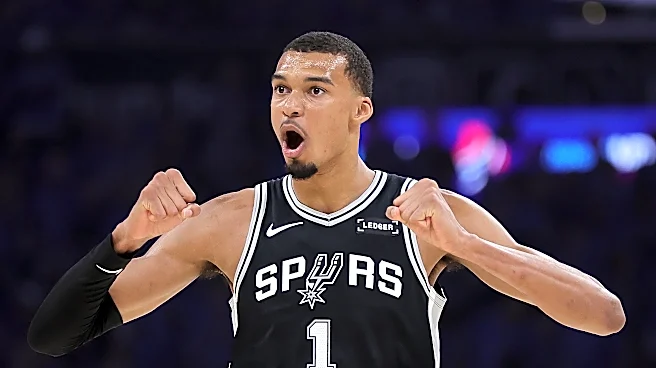
What's Happening?
Carter Bryant, a rookie with the San Antonio Spurs, has been the subject of rumors suggesting he is the nephew of the late NBA legend Kobe Bryant. These rumors gained traction following his draft, largely due to the shared last name. However, it has been clarified
that there is no familial connection between Carter and Kobe Bryant. Carter's father, D'Cean Bryant, was a notable college basketball player at Long Beach State and later became a high school coach in California. Carter's upbringing in a household fluent in American Sign Language, as a grandchild of deaf adults, has influenced his unique approach to basketball, emphasizing peripheral awareness and non-verbal communication on the court.
Why It's Important?
The rumors surrounding Carter Bryant highlight the impact of social media and public perception on athletes' careers. While the association with Kobe Bryant could bring increased attention and pressure, it also underscores the importance of verifying information before it spreads widely. For Carter, the focus remains on establishing his own identity and career in the NBA, separate from any perceived connections to basketball royalty. This situation also reflects broader themes in sports media, where narratives can quickly overshadow individual achievements and personal stories.
What's Next?
Carter Bryant will continue to develop his career with the San Antonio Spurs, aiming to make a name for himself based on his own merits. The Spurs and Bryant will likely focus on his growth as a player, leveraging his unique background and skills. As he progresses, the team and Bryant himself may address the rumors directly to clarify his story and redirect attention to his performance and potential contributions to the team.
Beyond the Headlines
Carter Bryant's story also brings attention to the experiences of athletes from diverse backgrounds, particularly those with connections to the deaf community. His ability to navigate the basketball court using enhanced peripheral vision and non-verbal cues could inspire discussions on the role of diverse communication skills in sports. This aspect of his background may also encourage greater inclusivity and understanding within the sports community regarding players with unique personal histories.