



What's Happening?
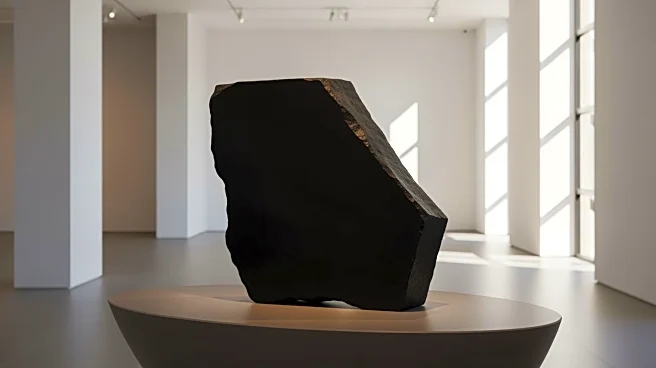
The Museum of Contemporary Art (Moca) in Los Angeles has acquired a significant sculpture by artist Kara Walker titled 'Unmanned Drone'. This piece is crafted from a decommissioned statue of Confederate General Thomas Jonathan 'Stonewall' Jackson, originally
created by Charles Keck in 1921. The statue was one of two Confederate monuments dismantled in Charlottesville, Virginia, following the 2017 'Unite the Right' rally. Walker's work is part of the 'Monuments' exhibition, which is displayed at both Moca and The Brick, a non-profit space in Los Angeles. The exhibition, co-curated by Walker, explores the legacy of Confederate monuments and features contemporary responses to white supremacist iconography. The sculpture transforms the original monument into a fragmented figure, symbolizing a critique of post-Civil War legacies in the United States.
Why It's Important?
The acquisition of Kara Walker's 'Unmanned Drone' by Moca is significant as it represents a critical engagement with the history and legacy of Confederate monuments in the United States. This move by a major art institution highlights the ongoing cultural and political discourse surrounding these symbols and their place in contemporary society. By recontextualizing the statue, Walker's work challenges viewers to reconsider the narratives and values these monuments represent. The exhibition and acquisition also reflect a broader trend in the art world to address historical injustices and promote diverse perspectives. This development could influence other museums and cultural institutions to re-evaluate their collections and the stories they choose to tell.
What's Next?
The 'Monuments' exhibition, featuring Walker's sculpture, will continue to be on display at Moca and The Brick until May 3. As the exhibition progresses, it may spark further discussions and debates about the role of public monuments and the importance of historical memory in shaping national identity. The acquisition could also encourage other museums to consider similar initiatives, potentially leading to a wider reassessment of Confederate symbols in public spaces. Additionally, the exhibition may inspire artists and curators to explore new ways of engaging with contentious historical subjects, fostering a more inclusive and critical dialogue within the art community.