


What's Happening?
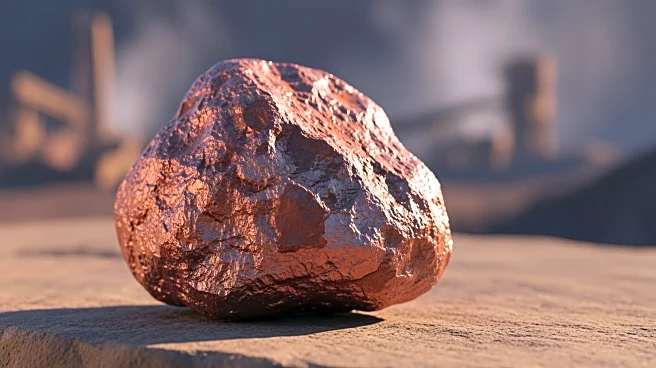
Rio Tinto has announced its intention to commence operations at the Resolution Copper mine in Arizona by the mid-2030s. This project is expected to produce over 18 million tonnes of copper throughout its lifespan, potentially fulfilling more than a quarter
of the U.S. copper demand. The company has initiated a $500 million drilling program to explore previously inaccessible sections of the deposit. However, due to challenging smelting economics in the U.S., Rio Tinto may need to export a portion of its copper concentrate. The company recently secured the necessary land for the project after a lengthy legal battle involving the San Carlos Apache people's religious rights.
Why It's Important?
The Resolution Copper mine represents a significant development in meeting the increasing U.S. demand for copper, a critical component in various industries, including electronics and renewable energy. The project's potential to supply a substantial portion of the national demand could reduce reliance on imports and enhance domestic production capabilities. However, the need to export copper concentrate due to smelting challenges highlights ongoing issues within the U.S. smelting industry, which may affect the project's economic viability and the broader supply chain. The legal and cultural implications of the land acquisition also underscore the complex intersection of industrial development and indigenous rights.
What's Next?
As Rio Tinto progresses with the Resolution Copper project, the company will likely continue to address the smelting challenges by exploring alternative solutions or partnerships. The ongoing legal and cultural considerations may also prompt further negotiations with indigenous groups to ensure compliance with cultural and environmental standards. Additionally, the project's development will be closely monitored by industry stakeholders and policymakers, given its potential impact on the U.S. copper supply and the broader mining sector.