






What's Happening?
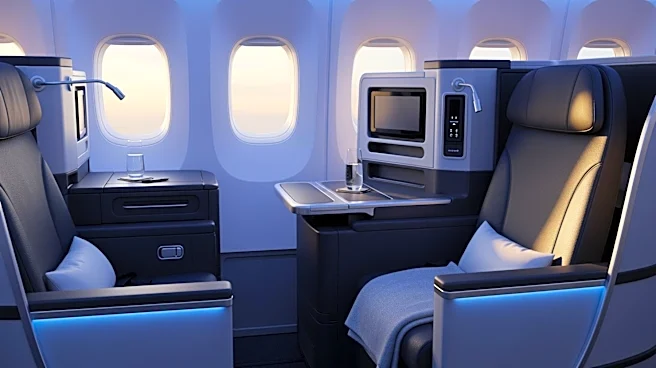
United Airlines has announced the introduction of its Polaris Business Class on select domestic flights, marking a significant upgrade in its premium service offerings. This change applies to premium transcontinental routes, such as those between Newark
and Los Angeles or San Francisco, as well as long-haul flights to Hawaii from Chicago and Newark. Previously, United's domestic premium cabins were marketed simply as first or business class, but the rebranding to Polaris Business Class brings with it access to the exclusive Polaris Lounges, a benefit not previously available on domestic routes. This move is part of a broader overhaul of United's lounge access policies, which includes the introduction of 'basic' Polaris fares that do not include lounge access, thereby incentivizing passengers to purchase higher fare tickets for added benefits.
Why It's Important?
The introduction of Polaris Business Class on domestic flights is a strategic move by United Airlines to enhance its competitive edge in the premium travel market. By offering Polaris Lounge access on these routes, United aligns itself with competitors like American Airlines and Delta, which provide similar premium lounge access on transcontinental flights. This change not only elevates the travel experience for United's premium customers but also potentially increases revenue by encouraging passengers to opt for higher fare classes. The rebranding and lounge access overhaul reflect United's commitment to improving customer satisfaction and loyalty, which are crucial in the highly competitive airline industry.
What's Next?
As United Airlines rolls out these changes, the airline is expected to continue refining its premium offerings. The introduction of the new Coastliner A321neos, which promise enhanced service and amenities, is anticipated to further bolster United's position in the market. Additionally, the airline may expand the availability of Polaris Business Class to more domestic routes, depending on customer response and demand. Stakeholders, including frequent flyers and travel industry analysts, will likely monitor these developments closely to assess their impact on United's market share and customer satisfaction.