
What's Happening?
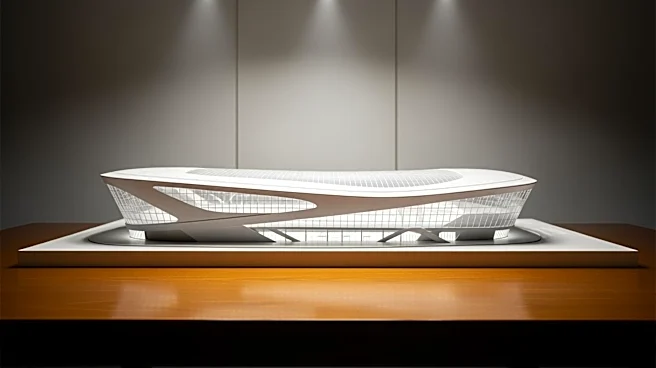
The University of Oregon is constructing a new state-of-the-art football practice facility, known as the '2.MO' project, in Eugene. This development is part of the university's efforts to maintain competitiveness
in college football by providing advanced training environments for its athletes. The facility, expected to be completed by 2027, will span 170,000 square feet and include indoor classrooms, a temperature-controlled field, and a players' lounge. The construction is designed to reflect Oregon's local culture, incorporating locally-sourced timber and other regional elements. The project also involves re-routing Leo Harris Parkway to improve traffic flow and enhance the fan experience. Coach Dan Lanning has emphasized the importance of this facility in keeping the Ducks competitive in the evolving landscape of college football.
Why It's Important?
The construction of the new facility is significant for the Oregon Ducks as it aims to bolster the team's competitive edge in college football. By providing cutting-edge training amenities, the university seeks to attract top talent and improve player performance. This development reflects a broader trend in college sports where institutions invest heavily in infrastructure to gain a competitive advantage. The facility's design, which incorporates local cultural elements, also strengthens the university's connection to the community and state. Additionally, the project is expected to enhance the overall experience for fans and visitors, potentially increasing attendance and support for the team.
What's Next?
As the construction progresses, the university will likely continue to promote the facility's benefits to prospective athletes and the community. The completion of the '2.MO' project is anticipated to coincide with strategic recruitment efforts, leveraging the new amenities to attract high-caliber players. The re-routing of Leo Harris Parkway and other infrastructure improvements will be monitored to ensure they meet the intended goals of reducing traffic and enhancing the fan experience. Stakeholders, including university officials and local businesses, will be keenly observing the project's impact on the university's reputation and economic contributions to the region.
Beyond the Headlines
The development of the '2.MO' facility highlights the increasing commercialization and professionalization of college sports. As universities invest in high-tech facilities, the line between amateur and professional sports continues to blur, raising questions about the role of athletics in higher education. This trend may prompt discussions about the allocation of resources within universities and the balance between academic and athletic priorities. Furthermore, the emphasis on local culture in the facility's design underscores a growing awareness of the importance of community identity in institutional branding.