



What's Happening?
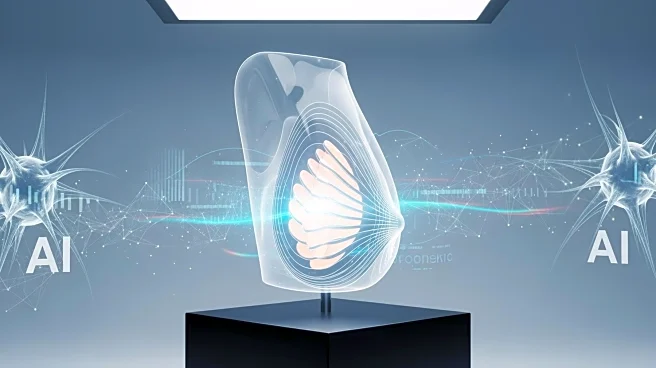
SimBioSys, an AI-driven precision medicine company, has presented new clinical data at the Miami Breast Cancer Conference, demonstrating that its AI digital twin platform, TumorSight Viz, performs comparably to radiologists in identifying and measuring
landmarks in early-stage breast cancer. The study, a retrospective multi-institutional analysis, highlights the platform's ability to generate patient-specific 3D representations from standard breast MRI, aiding in anatomical assessment and surgical planning. Key findings include the AI's performance being within the variability range of expert radiologists, high spatial concordance with a 0.92 surface Dice score, and consistent results across different imaging environments. The platform also provides rapid quantitative outputs, producing landmark features and measurements in minutes.
Why It's Important?
The introduction of AI digital twin technology in breast cancer care represents a significant advancement in precision medicine. By providing objective, anatomy-specific insights, TumorSight Viz can enhance the accuracy and consistency of preoperative assessments, potentially leading to improved surgical outcomes. This technology supports multidisciplinary teams in making more informed decisions, ultimately benefiting patient care. The ability of AI to mirror radiologist assessments could streamline workflows, reduce variability in interpretations, and improve communication across care teams. As healthcare systems increasingly adopt AI-driven tools, this development underscores the potential for AI to transform cancer treatment by offering personalized and precise medical insights.
What's Next?
SimBioSys aims to continue advancing its AI-driven platforms, with plans to further validate and expand the capabilities of TumorSight Viz. The company is also developing the TumorSight Risk solution, which combines AI and spatial biophysics to enhance cancer treatment personalization. As the adoption of AI in healthcare grows, stakeholders, including clinicians and healthcare institutions, may increasingly integrate such technologies into standard practice. Future research and clinical trials could explore additional applications of AI digital twins in other cancer types and medical conditions, potentially broadening the impact of AI in precision medicine.