


What's Happening?
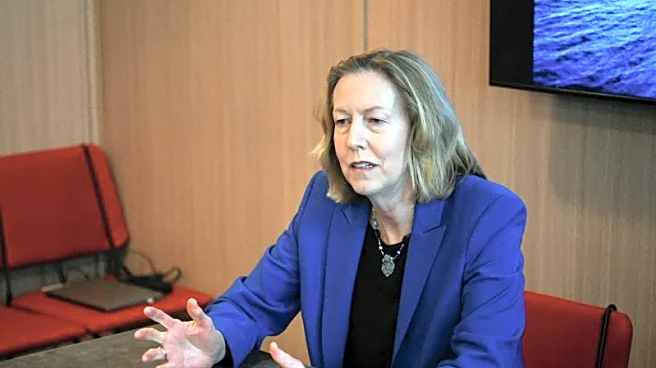
BP has appointed Carol Howle as the deputy chief executive officer, tasking her with overseeing the company's portfolio review and strategy development. This move comes as BP shifts its focus back to oil and gas after a previous unsuccessful venture into
renewable energy. Howle, who previously served as interim CEO, will also resume her role as head of supply, trading, and shipping. BP is undergoing significant changes, including cutting billions from renewable projects and planning to divest $20 billion in assets by 2027. The company aims to reduce its net debt to a target range of $14 billion to $18 billion by the end of 2027. BP's Chair, Albert Manifold, has indicated that some of BP's assets might be more valuable to other entities, suggesting potential divestitures.
Why It's Important?
The appointment of Carol Howle as deputy CEO is a strategic move for BP as it navigates a complex transition period. By focusing on oil and gas, BP aims to stabilize its financial position and streamline operations. This shift could impact the broader energy market, influencing investment trends and competitive dynamics. The divestment of $20 billion in assets and the reduction of debt are critical steps in BP's strategy to enhance financial health and operational efficiency. Stakeholders, including investors and industry analysts, will closely monitor BP's progress in achieving these targets, as they could significantly affect the company's market position and future growth prospects.
What's Next?
Carol Howle will lead the development of BP's long-term strategy beyond 2027, with the strategy and sustainability team reporting directly to her. The company will continue to evaluate its asset portfolio, potentially leading to further divestitures or acquisitions. BP's focus on reducing debt and costs will likely involve strategic decisions regarding its asset base and operational structure. The energy industry will watch BP's actions closely, as they may set precedents for other companies facing similar challenges in balancing traditional energy sources with renewable investments.