
What's Happening?
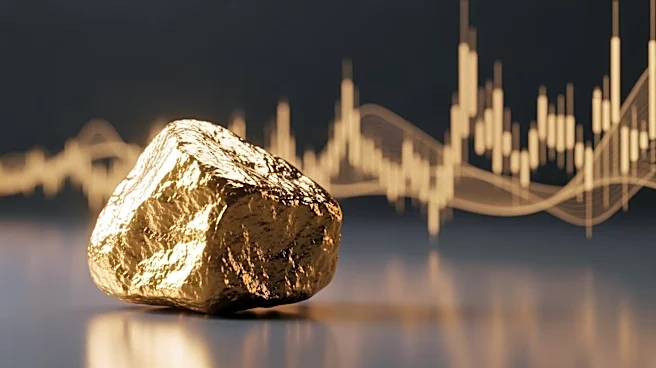
Gold prices are experiencing significant pressure due to a combination of rising oil prices, inflation trends, and central bank activities. According to a report by Neils Christensen, market observers
such as Lukman Otunuga and Philip Streible have noted that geopolitical tensions, particularly in the Middle East, and interest rate expectations are influencing the precious metals market. The U.S. labor market is also a key focus for traders. A notable trend is the shift from dollar reserves to gold, driven by potential demand from BRICS+ nations. Recent data highlights that China purchased five tonnes of gold in March, while Turkey monetized 118 tonnes. Additionally, the Bank of France made a significant transaction involving its U.S. gold reserve, resulting in a $15 billion profit. In the base metals sector, copper is forecasted to potentially outperform gold and silver, with predictions of reaching $30 in a new commodity cycle.
Why It's Important?
The developments in the gold market have broad implications for global economic stability and investment strategies. The shift from dollar reserves to gold by countries like China and Turkey indicates a potential realignment in global financial reserves, which could impact the U.S. dollar's dominance. The geopolitical tensions in the Middle East, particularly around the Strait of Hormuz, could further destabilize oil prices, affecting inflation and economic growth. The forecasted rise in copper prices suggests a shift in commodity investment strategies, potentially impacting industries reliant on these metals. The actions of central banks, such as the Bank of France's gold transactions, highlight the strategic financial maneuvers countries are employing to navigate economic uncertainties.
What's Next?
Looking ahead, the gold market is expected to remain volatile as geopolitical tensions and economic policies continue to evolve. The potential increase in demand from BRICS+ nations could further drive gold prices, while central banks may continue to adjust their reserves in response to global economic shifts. The forecasted rise in copper prices suggests that investors may increasingly focus on base metals, potentially leading to shifts in market dynamics. Stakeholders, including investors and policymakers, will need to closely monitor these trends to make informed decisions.