
What's Happening?
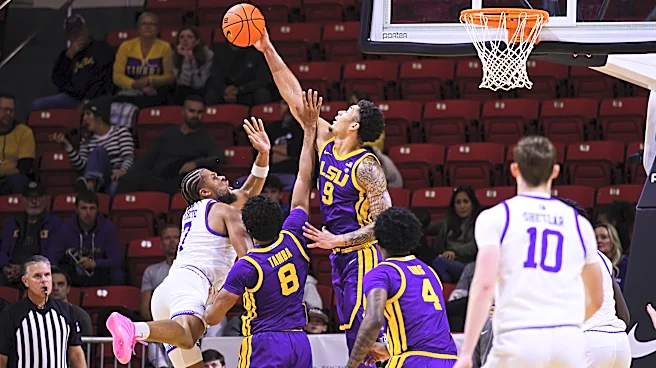
Will Wade has returned as the head coach of LSU men's basketball, aiming to rebuild the team with a focus on international recruits. Wade, who previously led the team to a Sweet 16 appearance and an SEC
championship, is starting from scratch with a new roster and coaching staff. Currently, the team includes Kentucky transfer Mouhamed Dioubate and Brazilian recruit Márcio Santos. Wade plans to lean heavily on international talent, believing these players bring valuable experience. This strategy marks a shift from his previous approach at NC State, where he overextended resources on a larger roster. Wade's goal is to concentrate resources on a core group of seven or eight players, supplemented by additional talent as needed.
Why It's Important?
Wade's strategy to focus on international recruits could significantly impact the NCAA landscape by introducing diverse playing styles and experiences. This approach may also influence other college programs to explore international talent more aggressively. For LSU, this could mean a quicker turnaround in performance, potentially leading to more competitive seasons and increased visibility in college basketball. The success of this strategy could also affect recruiting dynamics, as other schools might adopt similar tactics to remain competitive. Financially, concentrating resources on fewer players could lead to more efficient use of scholarships and funding, potentially setting a new standard for roster management in college sports.
What's Next?
As Wade continues to build his roster, the next steps involve finalizing additional international recruits and integrating them into the team. The upcoming season will be a test of this new strategy, with the potential to reshape LSU's standing in college basketball. Stakeholders, including fans and university officials, will be watching closely to see if Wade's approach yields the desired results. Success could lead to further investment in international scouting and recruitment, while challenges might prompt adjustments in strategy. The broader college basketball community will also be observing the outcomes, which could influence future recruiting trends across the NCAA.