






What's Happening?
Komatsu and ABB are advancing their dynamic energy transfer solutions beyond traditional trolley-assist systems. At The Electric Mine 2026 conference in Lisbon, Portugal, representatives from both companies announced the development of a 'side arm' system.
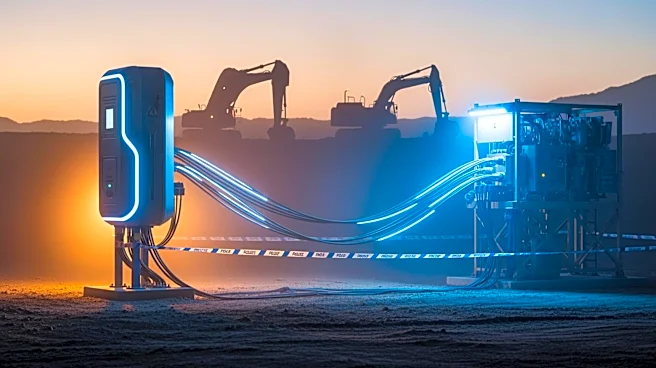
This new system is set to be showcased at the Komatsu-owned Arizona Proving Grounds (AZPG) in the United States. The initiative aims to enhance energy transfer efficiency in mining operations by integrating both stationary and dynamic energy transfer methods. The side rail system, which is part of this collaboration, is expected to be piloted over the next few years. Komatsu will manage the mobile equipment aspect, while ABB will handle the fixed infrastructure. The AZPG installation will complement an existing trolley system, featuring a 6.5 MW stationary charging area with both manual and automated megawatt charging capabilities.
Why It's Important?
The collaboration between Komatsu and ABB represents a significant step towards decarbonizing mining operations, a critical goal for the industry. By improving energy transfer efficiency, the new system could reduce reliance on fossil fuels, thereby lowering carbon emissions. This development is particularly relevant for the U.S. mining sector, which is under increasing pressure to adopt more sustainable practices. The successful implementation of this system could set a precedent for other mining operations globally, potentially leading to widespread adoption of similar technologies. The project also highlights the importance of partnerships between equipment manufacturers and technology providers in driving innovation and sustainability in industrial sectors.
What's Next?
The next steps involve piloting the side rail system at the Arizona Proving Grounds, with further testing and refinement expected over the coming years. If successful, this system could be rolled out to other mining sites, both in the U.S. and internationally. Stakeholders in the mining industry, including environmental groups and regulatory bodies, will likely monitor the project's progress closely. The outcome of these pilots could influence future regulatory standards and industry practices regarding energy use and emissions in mining operations.