



What's Happening?
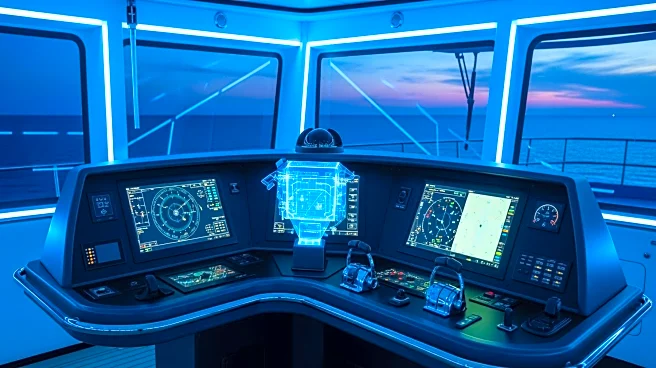
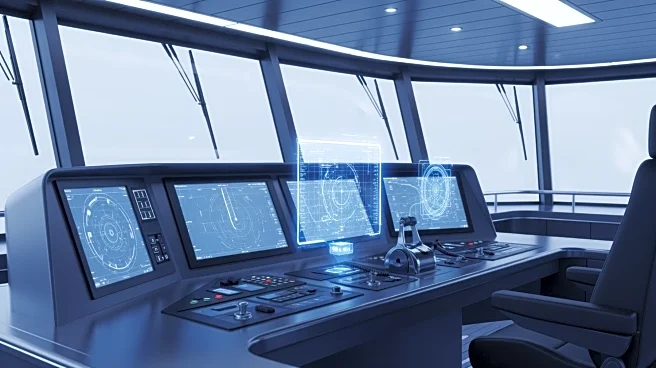
The maritime industry is undergoing a significant transformation with the integration of artificial intelligence (AI) and automation into its operations. Traditionally reliant on manual processes, the industry is now shifting towards digital solutions
to manage complex systems more efficiently. AI-powered tools are being deployed to optimize scheduling, monitor compliance, and enhance crew management. For instance, the Port of Corpus Christi in Texas has implemented the OPTICS digital-twin platform, which integrates live vessel-tracking and geospatial models to improve situational awareness and operational efficiency. This shift is driven by the need to address regulatory demands, labor shortages, and the industry's move towards data-driven decision-making.
Why It's Important?
The adoption of AI and automation in maritime operations is crucial for several reasons. It addresses the industry's pressing challenges, such as labor shortages and the need for compliance with international maritime labor conventions. By automating crew compliance workflows and integrating real-time alerts, these technologies reduce human error and enhance safety and morale among maritime workers. Furthermore, the shift towards digital solutions allows for more efficient management of payroll and compliance, building trust and transparency across fleets. This transformation is expected to drive significant growth in the global maritime digitization market, projected to reach $361 billion by 2030.
What's Next?
As the maritime industry continues to embrace digital transformation, the focus will likely shift towards hybrid architectures that combine onboard intelligence with cloud-based analytics. This will enable more modular and configurable systems, enhancing compliance, payroll, and crew management processes. The integration of specialized digital tools, such as health monitoring and predictive maintenance, will further streamline operations. Over the next decade, successful maritime organizations will prioritize data as a core infrastructure, leveraging onboard analytics engines to optimize crew rotations and automate compliance in near real-time.
Beyond the Headlines
The integration of AI and automation in maritime operations also presents challenges, particularly in terms of connectivity at sea. Ships often operate with limited satellite bandwidth, necessitating hybrid platform designs that ensure operational continuity even when offline. Additionally, the industry faces 'integration debt,' where outdated systems hinder progress. To overcome this, maritime companies are adopting API-first ecosystems, allowing for gradual modernization without disrupting existing workflows. This approach emphasizes the importance of clean data and investment in data governance, user training, and cultural change to fully realize the benefits of digital transformation.