



What's Happening?
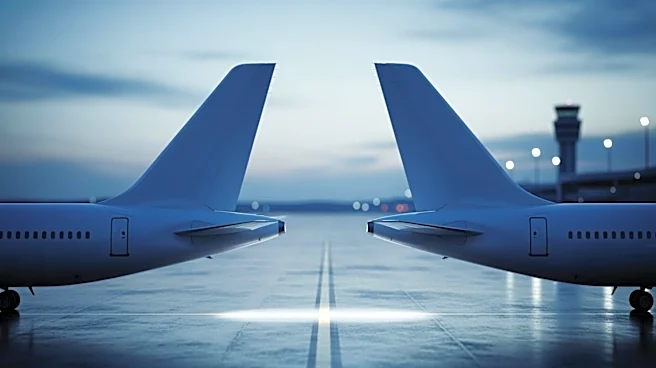
United Airlines has decided to cease its pursuit of a merger with American Airlines after the latter declined to engage in discussions. United CEO Scott Kirby had initially proposed the merger during a meeting with President Trump, highlighting the potential
benefits such as increased economy seating and a more globally competitive airline. However, American Airlines, led by CEO Robert Isom, rejected the proposal, citing concerns over competition and potential negative impacts on consumers. The merger would have represented the largest consolidation in the U.S. airline industry in over a decade, raising significant antitrust concerns among analysts and industry experts.
Why It's Important?
The proposed merger between United and American Airlines was significant due to its potential impact on the U.S. airline industry, which is already dominated by a few major players. A successful merger could have led to increased market concentration, potentially reducing competition and affecting consumer prices. While United argued that the merger would not lead to higher prices and would benefit the U.S. economy by creating jobs, the rejection by American Airlines underscores the complexities of such large-scale consolidations. The decision also reflects broader regulatory and antitrust challenges that large mergers face in the current economic climate.
What's Next?
With the merger off the table, both United and American Airlines will continue to operate independently. The focus may shift to other strategic initiatives to enhance competitiveness and market share. For United, this could involve exploring alternative partnerships or internal growth strategies. Meanwhile, regulatory bodies and industry stakeholders will likely continue to scrutinize potential mergers and acquisitions in the airline sector, ensuring that consumer interests and market competition are preserved.