



What's Happening?
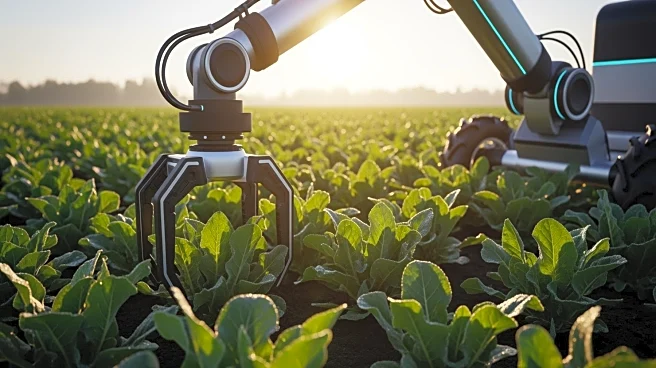
The global agriculture robots market is anticipated to experience substantial growth, expanding from $12.2 billion in 2025 to $139.4 billion by 2035, with a compound annual growth rate (CAGR) of 24.78%. This growth is driven by the increasing global population, which is expected to reach 10 billion by 2050, necessitating enhanced food production capabilities. Agricultural robots are becoming integral to farming operations, offering improved efficiency and reduced labor costs. These robots are equipped with advanced technologies such as sensors and computer vision, enabling them to adapt to changing agricultural environments. The market is segmented into various types of robots, including automated harvesting systems, driverless tractors, and UAVs,
with milking robots currently holding the largest market share. The outdoor farming environment segment leads the market, although indoor farming is expected to grow rapidly.
Why It's Important?
The expansion of the agriculture robots market is crucial for addressing the challenges posed by a growing global population and the need for increased food production. By enhancing operational efficiency and reducing labor costs, these robots can significantly impact the agricultural sector. The adoption of advanced technologies like artificial intelligence and machine learning in these robots allows for precision agriculture, improving crop monitoring and management. This technological advancement not only supports large-scale farms but also offers potential benefits for smaller farms through increased productivity and cost savings. The growth of this market could lead to a transformation in farming practices, making agriculture more sustainable and efficient.
What's Next?
As the agriculture robots market continues to grow, further advancements in technology are expected to enhance the capabilities of these robots. The introduction of new robots, such as SIZA Robotics' TOOGO, set for release in 2025, highlights ongoing innovation aimed at addressing labor shortages and rising agricultural costs. The market is likely to see increased investment in software solutions, which are projected to grow at a faster rate than hardware. Additionally, the Robot-as-a-Service model is predicted to gain traction, offering flexible solutions for farmers. The market's growth will likely attract more companies, leading to increased competition and further innovation.
Beyond the Headlines
The rise of agricultural robots presents ethical and cultural considerations, particularly regarding the displacement of traditional farming jobs. While these robots offer efficiency and cost benefits, there is a need to address the potential impact on rural communities and employment. Policymakers and industry leaders must consider strategies to support workforce transitions and ensure that the benefits of automation are equitably distributed. Additionally, the integration of advanced technologies in agriculture raises questions about data privacy and security, as these robots collect and analyze vast amounts of data. Ensuring robust data protection measures will be essential as the market evolves.