
What's Happening?
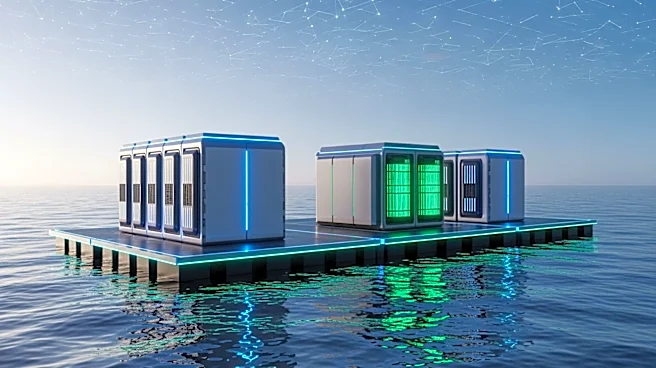
Panthalassa, an Oregon-based start-up, is developing autonomous floating data centres designed to meet the growing energy demands of artificial intelligence (AI). These platforms, shaped like a golf ball
on a tee and standing 85 meters tall, are intended to operate in the ocean, generating their own electricity through wave power. The initiative aims to bypass traditional electrical grids and provide carbon-free computing in international waters. However, experts warn of significant challenges, including the harsh ocean environment, which could complicate maintenance, and the limited bandwidth and higher latency of satellite communications compared to fiber-optic cables. Despite these hurdles, Panthalassa has secured $140 million in funding to advance this innovative approach.
Why It's Important?
The development of floating data centres is significant as it addresses the immense energy consumption associated with AI, which is projected to exceed the electricity usage of some small countries by 2030. By moving data centres offshore, Panthalassa aims to alleviate pressure on land-based electrical grids and reduce carbon emissions. This approach could revolutionize how data centres operate, potentially leading to more sustainable computing solutions. However, the success of this venture depends on overcoming technical challenges and proving the economic viability of ocean-based systems compared to traditional land-based data centres.
What's Next?
Panthalassa's floating data centres are still in the experimental phase, and the company must demonstrate that these platforms can compete economically with conventional data centres. Future steps include addressing the technical challenges of operating in a remote ocean environment and ensuring reliable power and network connectivity. The company will also need to monitor the environmental impact of these platforms on marine ecosystems. As the project progresses, it may influence other companies exploring similar offshore computing solutions, potentially leading to broader adoption of this technology.
Beyond the Headlines
The concept of floating data centres raises questions about the long-term sustainability and environmental impact of such installations. While they offer a potential solution to the energy demands of AI, the effects on marine life and ecosystems remain uncertain. Additionally, the reliance on satellite communications could limit the practicality of these centres for applications requiring low latency. The success of Panthalassa's initiative could pave the way for further innovations in sustainable computing, but it also highlights the need for careful consideration of environmental and logistical challenges.