
What's Happening?
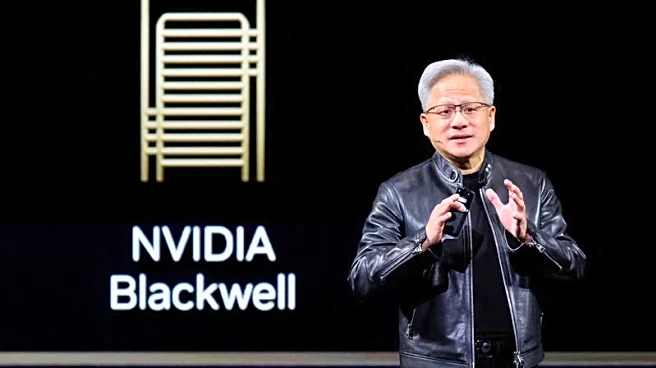
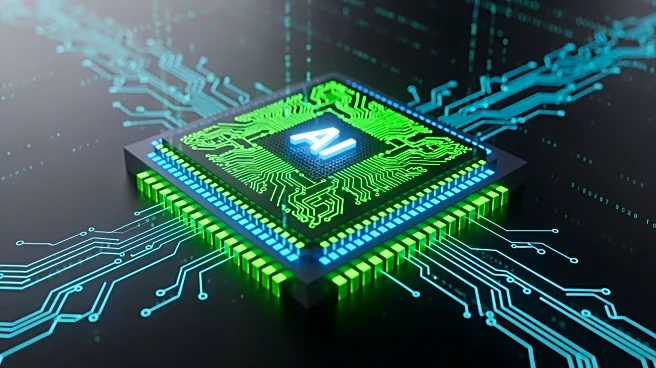
At Nvidia's annual GTC conference, CEO Jensen Huang announced new hardware developments, including a Language Processing Unit (LPU) and advancements in rack-scale architecture. The LPU, developed from technology acquired from Groq, is designed to enhance
GPU performance, while the new rack-scale system aims to improve data center efficiency. The conference highlighted a shift towards agentic AI, which requires more complex computing configurations. Nvidia's strategic focus is expanding beyond GPUs to include CPUs and LPUs, reflecting the evolving needs of AI applications.
Why It's Important?
Nvidia's announcements underscore the growing importance of agentic AI, which is transforming how AI systems operate by enabling more autonomous and task-oriented functionalities. This shift is driving demand for new types of computing power, positioning Nvidia to capitalize on these emerging needs. The introduction of the LPU and new rack-scale systems could enhance Nvidia's market position, offering solutions that address the increasing complexity of AI workloads. As AI continues to integrate into various industries, Nvidia's innovations could have significant implications for data center operations and AI development.
What's Next?
Nvidia plans to continue developing its rack-scale architecture, with the next system, Vera Rubin Ultra, expected to ship in 2027. The company is also focusing on expanding its market presence in China, despite ongoing export control challenges. As Nvidia adapts its strategy to meet the demands of agentic AI, it will likely pursue further acquisitions and partnerships to enhance its technological capabilities. The industry will be watching how Nvidia navigates these developments and the impact on its financial performance and market share.