
What's Happening?
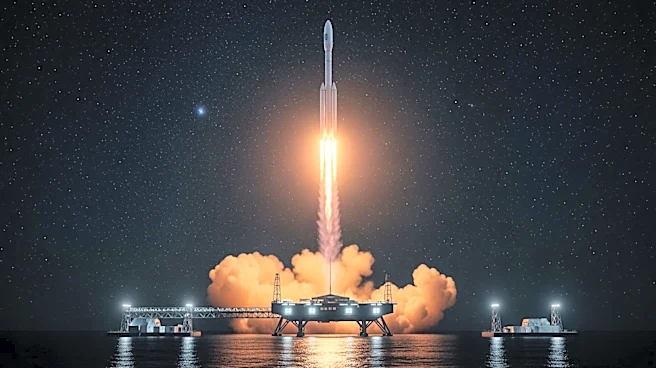
SpaceX successfully launched a Falcon 9 rocket carrying 45 payloads, including the South Korean Earth observation satellite CAS500-2, from Vandenberg Space Force Station. The mission, named CAS500-2, is part
of Korea Aerospace Industries' program for precision ground-based observation. The launch took place at 12 a.m. PDT, and the satellite was deployed into a Sun-synchronous orbit about an hour after liftoff. The mission underscores the U.S.-Republic of Korea alliance and Vandenberg's role in international space cooperation. The Falcon 9's first stage booster, B1071, completed its 33rd flight and successfully landed at Landing Zone 4. The launch faced delays due to the war in Ukraine and changes in launch plans. The mission also included 44 other payloads from various international partners, highlighting the growing demand for space access.
Why It's Important?
This launch is significant as it demonstrates the strengthening of international alliances in space exploration, particularly between the U.S. and South Korea. The successful deployment of the CAS500-2 satellite enhances South Korea's capabilities in Earth observation, which is crucial for environmental monitoring and national security. The mission also highlights SpaceX's role in providing reliable and cost-effective access to space for international partners, fostering global cooperation. The inclusion of multiple payloads from various countries and companies reflects the increasing commercialization of space and the growing demand for satellite deployment services. This trend could lead to more collaborative efforts in space exploration and technology development.
What's Next?
Future launches in the CAS500 program are anticipated, with CAS500-4 and CAS500-5 expected to launch in 2025, although specific dates have not been announced. The success of this mission may encourage more countries and companies to collaborate with SpaceX for satellite launches, potentially leading to more frequent and diverse missions. The continued partnership between the U.S. and South Korea in space endeavors could pave the way for further joint projects, enhancing technological advancements and strategic alliances. Additionally, the successful deployment of multiple payloads may inspire other companies to invest in satellite technology and space exploration.