



What's Happening?
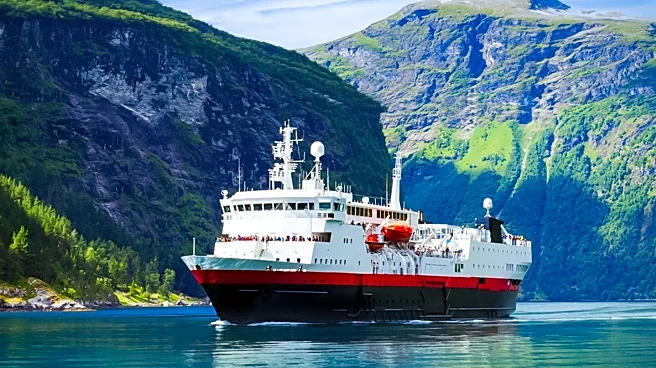
Havila Voyages is providing an eco-friendly alternative to traditional cruises with its coastal ferry sailings in Norway. Operating since 2021, Havila's four purpose-built ships travel along Norway's coast, offering a scenic and community-focused experience
without the typical cruise amenities like casinos and spas. The voyages emphasize local culture and history, with stops at 34 ports along the route from Bergen to Kirkenes. Passengers can enjoy activities such as king crab fishing excursions and scenic tours, while the ships themselves are designed with sustainability in mind, using liquefied natural gas and battery packs to reduce emissions.
Why It's Important?
The rise of slow travel, as exemplified by Havila Voyages, reflects a growing trend towards sustainable tourism. This approach not only reduces the environmental impact of travel but also supports local economies by promoting cultural and historical engagement. For the U.S. travel industry, this trend could influence future tourism strategies, encouraging a shift from high-impact, fast-paced travel to more sustainable and immersive experiences. This change could benefit local communities economically and culturally, while also appealing to environmentally conscious travelers.
What's Next?
As slow travel gains popularity, more travel companies may adopt similar eco-friendly practices, potentially leading to a broader industry shift. This could result in increased demand for sustainable travel options, prompting further innovation in eco-friendly transportation and accommodation. Additionally, as travelers seek more authentic experiences, destinations may develop new cultural and historical offerings to attract visitors. The success of Havila Voyages could serve as a model for other regions looking to balance tourism with environmental and cultural preservation.
Beyond the Headlines
The emphasis on slow travel and sustainability could have long-term implications for the travel industry, including changes in consumer expectations and travel patterns. As travelers become more aware of their environmental impact, there may be increased pressure on travel companies to adopt sustainable practices. This shift could also influence public policy, with governments potentially incentivizing eco-friendly tourism initiatives. Culturally, the focus on local experiences may lead to a deeper appreciation and preservation of regional traditions and histories.