




What's Happening?
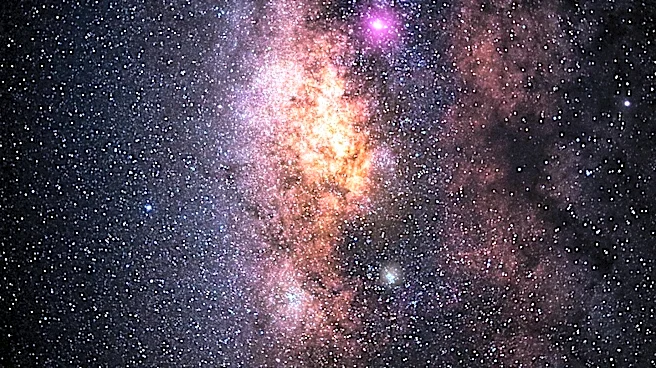
The core of the Milky Way galaxy is most visible in the northern hemisphere from February to October, with peak visibility during the new moon phases. This May, the new moon on the 16th provides an ideal opportunity for stargazers to observe the galaxy's
core. The best viewing times are between midnight and dawn, when the core is highest in the sky. To get the best view, enthusiasts are advised to find a dark sky location and look towards the southern sky, where the core can be seen arching past constellations such as Aquila, Scutum, Sagittarius, and Scorpius.
Why It's Important?
Observing the Milky Way's core offers a unique opportunity for both amateur and professional astronomers to engage with the cosmos. This event not only enhances public interest in astronomy but also supports educational initiatives that promote understanding of our galaxy. The visibility of the Milky Way's core can inspire scientific curiosity and foster a greater appreciation for the natural world, potentially influencing future generations of astronomers and scientists.
What's Next?
As the summer solstice approaches, the window for viewing the Milky Way's core will shorten due to increased twilight. Stargazers are encouraged to take advantage of the current conditions in May. Astronomy clubs and observatories may organize events to facilitate public viewing, providing telescopes and guidance to enhance the experience. Additionally, advancements in camera technology continue to improve the ability to capture stunning images of the galaxy, further promoting interest in astrophotography.