






What's Happening?
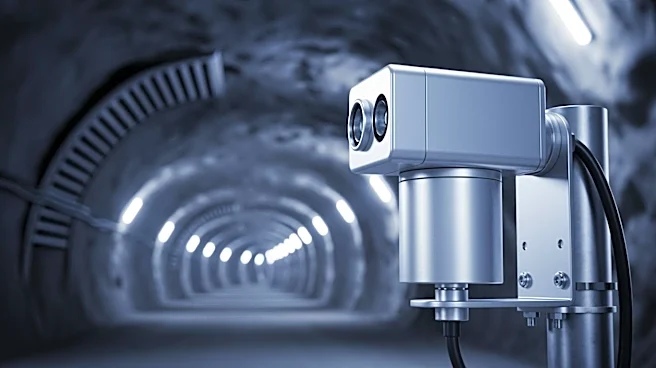
A study published in Scientific Reports highlights the effectiveness of a portable ultrasonic wind sensor in improving airflow monitoring in deep coal mines. The sensor, tested in a Chinese coal mine, demonstrated high accuracy in measuring underground
airflow, which is crucial for safety and efficient operations. Traditional mechanical anemometers often struggle with precision in such environments, but the ultrasonic sensor, with its reflective transducer layout and advanced timing electronics, offers improved measurement accuracy and stability. The study involved testing the sensor in a wind tunnel and field validation at Gaojialiang Coal Mine, showing reduced measurement errors and better performance compared to conventional methods.
Why It's Important?
Accurate airflow monitoring is vital for mine safety and operational efficiency, especially as mines extend deeper underground. The introduction of advanced sensors like the ultrasonic wind sensor can significantly enhance ventilation management, reducing risks associated with poor airflow, such as hazardous gas accumulation and inefficient resource use. This technological advancement could lead to improved safety standards and operational protocols in the mining industry, potentially influencing regulatory practices and encouraging further innovation in mine ventilation systems.
What's Next?
The study suggests potential for integrating the ultrasonic wind sensor into intelligent ventilation control systems, which could revolutionize mine safety and efficiency. Future research may focus on developing fully automated systems that utilize real-time data from such sensors to dynamically adjust ventilation settings. Stakeholders in the mining industry, including regulatory bodies and technology developers, may explore collaborations to implement these advancements on a broader scale, enhancing safety and productivity in mining operations.