

What's Happening?
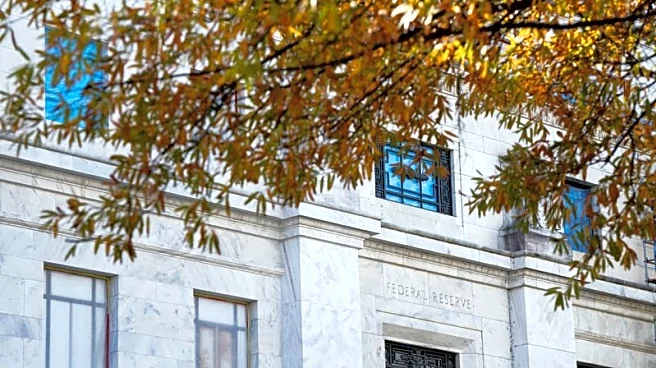
Kansas City Federal Reserve President Jeffrey Schmid has expressed opposition to further interest rate cuts, citing high inflation levels. Schmid noted that inflation has exceeded the Federal Reserve's target for nearly five years, with demand outpacing
supply and driving up service prices. He emphasized that the U.S. labor market is balanced, but inflation remains a concern, running near 3%. Schmid highlighted that a one percentage point increase in inflation reduces U.S. household purchasing power by $300 billion. Despite optimism about economic growth and the Trump administration's tax reforms, Schmid remains cautious about the impact of artificial intelligence on productivity and inflationary pressures.
Why It's Important?
Schmid's stance on interest rates is significant as it reflects the Federal Reserve's cautious approach to monetary policy amid persistent inflation. His opposition to rate cuts suggests a focus on controlling inflation rather than stimulating growth through lower borrowing costs. This decision impacts U.S. households by potentially maintaining higher interest rates, affecting loans and mortgages. Additionally, Schmid's remarks highlight the ongoing debate about the role of technological advancements like AI in economic growth and inflation management. The Fed's policy decisions are crucial for economic stability, influencing market expectations and investor confidence.
What's Next?
The Federal Reserve's future actions will likely depend on inflation trends and economic growth indicators. Schmid's comments suggest that the Fed may maintain current interest rates until inflation aligns with its 2% target. The ongoing geopolitical conflict in the Middle East, particularly the U.S.-Israeli attacks on Iran, could further complicate the Fed's policy decisions due to potential impacts on energy prices and inflation. Stakeholders, including businesses and consumers, will closely monitor the Fed's decisions, as they affect borrowing costs and economic conditions.