






What's Happening?
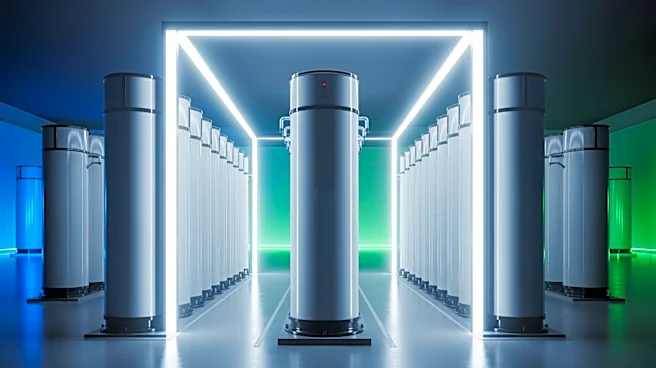
The U.S. energy storage industry has achieved a record-breaking first quarter in 2026, installing 9.7 gigawatt-hours (GWh) of new capacity. This marks the strongest first quarter in the sector's history, according to the U.S. Energy Storage Market Outlook
Q2 2026. The increase in installations is attributed to the growing demand for energy security amid global energy price volatility. The report highlights that over 610 GWh of energy storage is expected to be installed by 2030, driven by investments from tech companies like Google and Meta. Despite the positive growth, the industry faces challenges from federal permitting bottlenecks, which could slow progress and impact energy costs.
Why It's Important?
The expansion of energy storage capacity is crucial for enhancing grid reliability and reducing electricity costs in the U.S. As the country seeks to strengthen its energy independence, energy storage plays a vital role in insulating against fuel price shocks. The growth in this sector also supports the deployment of renewable energy sources, contributing to the transition to a clean energy economy. However, the potential delays in federal permitting could hinder this progress, affecting both consumers and the broader energy market. The situation underscores the need for supportive policies to facilitate the continued growth of energy storage infrastructure.
What's Next?
The energy storage industry is poised for further growth, with states like Texas, Arizona, and California leading in utility-scale battery storage capacity. However, the industry must navigate federal permitting challenges to maintain its momentum. If these bottlenecks persist, it could lead to increased energy costs and slow the deployment of critical infrastructure. Stakeholders, including policymakers and industry leaders, will need to address these challenges to ensure the continued expansion of energy storage and its benefits for energy security and economic stability.