




What's Happening?
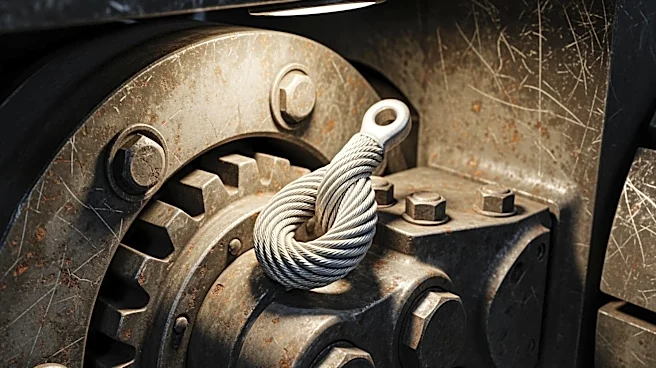
WireCo, a global supplier of wire and synthetic rope solutions, has developed UNION Gladiator synthetic pendants designed to mitigate vibration and shock transfer in mining equipment. These pendants are engineered to reduce the forces experienced by draglines
and electric rope shovels, which are critical in mining operations. As mining equipment is pushed harder to maximize output, managing dynamic loads becomes essential. The shock generated during digging can travel through the boom into the machine structure, causing repeated stress cycles that lead to fatigue, especially at weld points and high-stress junctions. Synthetic pendants act as damping elements, absorbing and dissipating energy before it propagates through the boom, thus reducing peak loads and smoothing stress distribution. This innovation helps limit stress concentrations that can lead to cracking and premature component failure.
Why It's Important?
The introduction of synthetic pendants by WireCo is significant for the mining industry as it addresses a major cause of structural fatigue in mining equipment. By reducing vibration and shock transfer, these pendants can extend the life of mining equipment components by an average of 14%, as demonstrated in a comparative analysis on an electric rope shovel. This reduction in stress not only limits the need for repairs but also enhances equipment availability and operational consistency. Additionally, lower vibration levels improve operator comfort and align with workplace safety standards set by organizations like OSHA. The commercial implications are substantial, as the cost of downtime in high-output operations can quickly surpass the initial investment in synthetic pendants. This approach is particularly beneficial for high-value mining operations, such as those involving copper, gold, and lithium, where even minor reductions in downtime can significantly impact production.
What's Next?
As the mining industry continues to seek ways to enhance efficiency and reduce operational costs, the adoption of synthetic pendants is likely to increase. Mines may begin to evaluate equipment investments based on long-term performance rather than upfront costs alone. This shift could lead to broader industry acceptance of synthetic pendants, especially in operations where equipment downtime has a pronounced impact on productivity. Additionally, as workplace safety regulations evolve, the demand for solutions that improve operator comfort and reduce exposure to harmful vibrations may drive further innovation in this area.