

What's Happening?
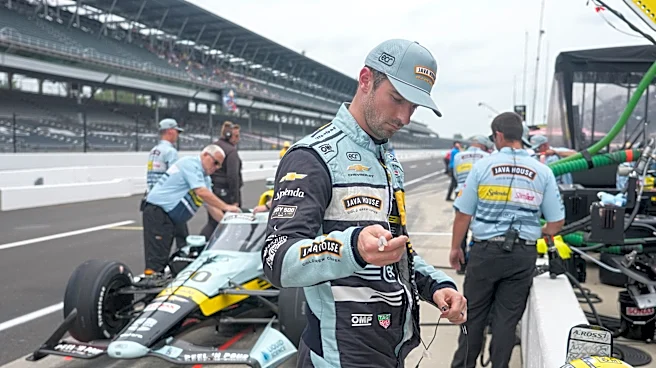
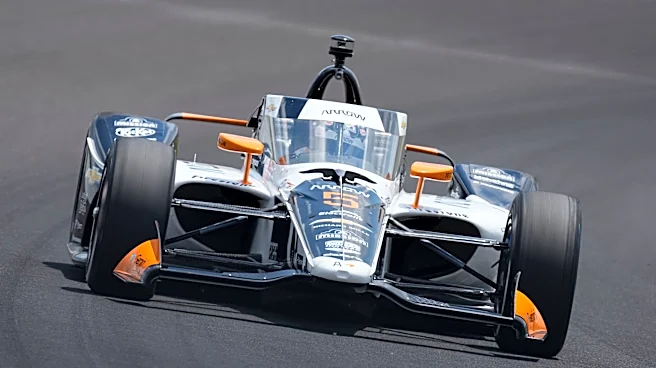
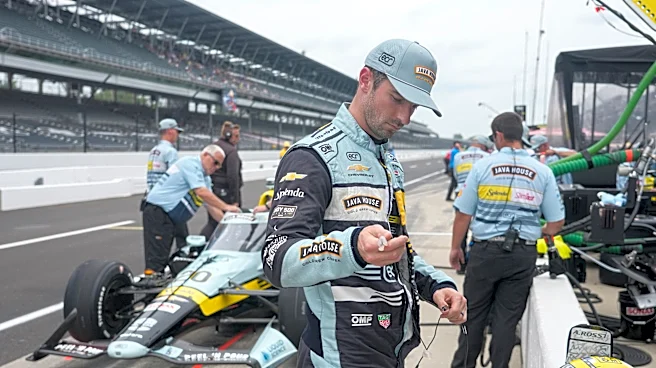
The starting grid for the 2026 Indianapolis 500 has been finalized, with Alex Palou set to lead the 33-car field. Palou, the defending race winner, is aiming to secure another victory in this prestigious event. The grid features eight former winners,
collectively holding 13 previous wins, all vying for the top spot. Notably, former Formula 1 driver Mick Schumacher will make his Indy 500 debut, starting in 27th position. The grid underwent changes after Caio Collet and Jack Harvey were disqualified following qualifying due to technical failures, resulting in their relegation to the back of the grid. This adjustment has set the stage for a competitive race, with several experienced drivers, including former F1 winners Takuma Sato, Alexander Rossi, and Marcus Ericsson, participating.
Why It's Important?
The Indianapolis 500 is one of the most significant events in motorsport, drawing attention from fans and sponsors worldwide. Alex Palou's position at the front of the grid highlights his status as a formidable competitor, potentially influencing team strategies and sponsorship deals. The presence of former F1 drivers, including Mick Schumacher, adds an international dimension to the race, attracting a broader audience and increasing the event's global appeal. The disqualifications of Collet and Harvey underscore the strict technical standards in place, emphasizing the importance of compliance and fair competition. This race not only impacts the drivers and teams involved but also has broader implications for the motorsport industry, including media coverage, advertising, and fan engagement.
What's Next?
As the race approaches, teams will finalize their strategies, focusing on tire management, fuel efficiency, and pit stop precision to gain a competitive edge. The performance of Alex Palou and other top contenders will be closely watched, with potential implications for their careers and future sponsorship opportunities. The disqualified drivers, Collet and Harvey, may seek to appeal the decision or focus on future races to regain their standing. Fans and analysts will be keenly observing the race dynamics, particularly the performance of former F1 drivers, which could influence future crossovers between racing series. The outcome of the race will likely impact team standings and driver reputations, shaping the narrative for the rest of the racing season.