






What's Happening?
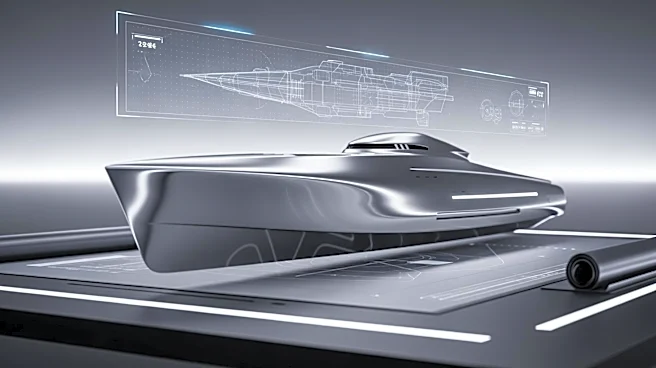
Korean Register (KR) and HD Hyundai Samho have successfully completed a joint project focused on integrating artificial intelligence (AI) into shipbuilding design and analysis. The project, which concluded with a signing ceremony at Posidonia 2026 in Athens,
Greece, was initiated under a Memorandum of Understanding (MOU) signed in June 2025. It aimed to create a more efficient and precise framework for ship design by leveraging AI technology. The research concentrated on two main areas: an AI-powered optimization and structural assessment solution for hull support arrangements, and a generative AI service for managing shipbuilding design documents. The AI model developed can perform structural analysis in near real-time, allowing for rapid evaluation of multiple hull support configurations. Additionally, a domain-specific Large Language Model (LLM) was created to facilitate the management and retrieval of complex design documents, enhancing operational efficiency and productivity.
Why It's Important?
The completion of this AI-powered project marks a significant advancement in the shipbuilding industry, potentially setting a new standard for design and analysis processes. By incorporating AI, KR and HD Hyundai Samho aim to streamline operations, reduce time and costs associated with traditional methods, and improve the precision of ship designs. This development could lead to broader adoption of AI technologies in the maritime sector, influencing how shipyards worldwide approach design and analysis. The project also highlights the growing importance of AI in industrial applications, showcasing its potential to transform traditional industries by enhancing efficiency and productivity. Stakeholders in the shipbuilding industry, including shipyards and maritime companies, stand to benefit from these innovations, which could lead to more competitive and sustainable operations.
What's Next?
Following the project's completion, KR and HD Hyundai Samho plan to accelerate the adoption of AI technology across their design and analysis workflows. They aim to expand the application of AI to a broader range of operational areas within the shipbuilding industry. This could involve further development of AI models and services to address other aspects of ship design and construction. The successful implementation of AI in this project may encourage other companies in the maritime sector to explore similar technological advancements, potentially leading to industry-wide changes in how ships are designed and built. As AI continues to evolve, its role in enhancing industrial processes is likely to grow, prompting ongoing innovation and adaptation within the sector.