


What's Happening?
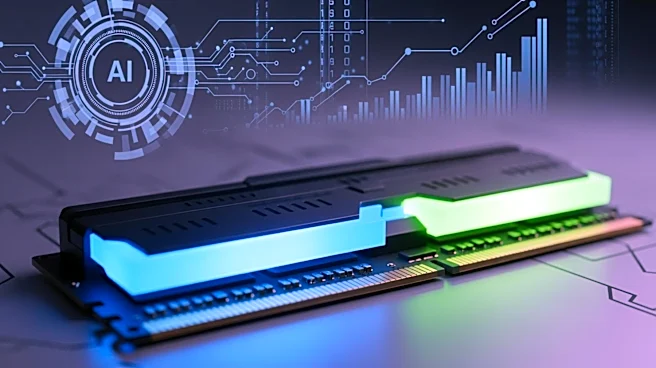
Dell's CEO has projected a significant increase in memory demand from the AI market by 2028, estimating it to be 625 times greater than in 2022. This prediction was shared at a Bank of America event, where it was noted that the memory per AI accelerator
and system scale is expected to expand dramatically. The most popular AI accelerator in 2022, Nvidia's H100, had 80 GB of HBM3, but this is anticipated to rise to 2 TB by 2028. The implementation rate of AI accelerators in data centers is also expected to increase by a factor of 25, leading to a substantial rise in total memory demand.
Why It's Important?
The forecasted increase in memory demand highlights the rapid growth and expansion of AI technologies and infrastructure. This surge in demand could have significant implications for the memory manufacturing industry, potentially leading to shortages and increased prices for DRAM, LPDDR5x, and NAND flash storage. As AI continues to integrate into various sectors, the need for more advanced and efficient memory solutions becomes critical. Companies involved in memory production may need to accelerate their expansion plans to meet future demands, impacting supply chains and technological advancements in the industry.
What's Next?
As the demand for memory in AI applications grows, memory manufacturers like SK hynix, Samsung, and Micron are expected to expand their production capabilities. However, meeting the projected demand may prove challenging, potentially leading to supply constraints and higher costs. Industry stakeholders will need to strategize on how to balance production with demand, possibly investing in new technologies or partnerships to enhance capacity. The ongoing development of AI technologies will continue to drive innovation in memory solutions, influencing future market dynamics and technological progress.