

What's Happening?
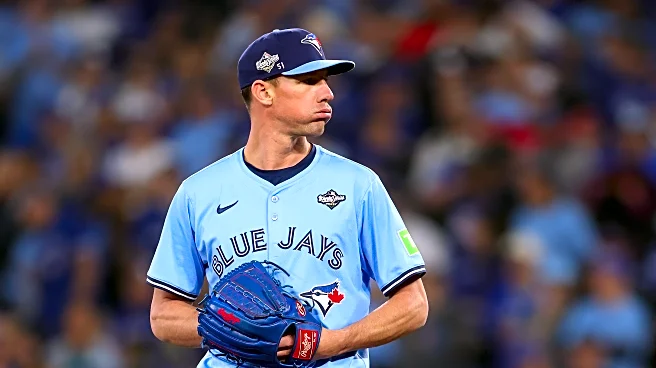
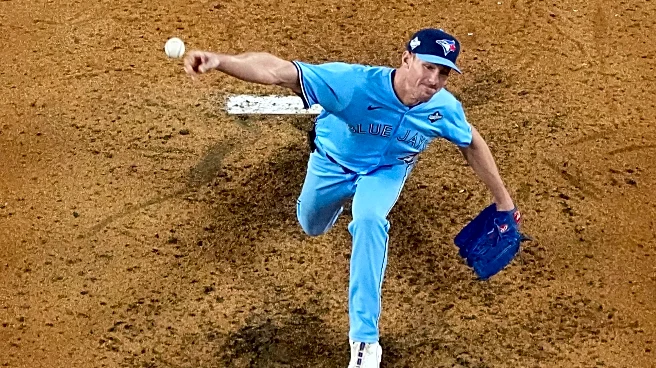
The Toronto Blue Jays have signed Tyler Rogers, a submarine-style reliever, to a three-year, $37 million contract. This move comes as part of the Blue Jays' active offseason strategy to bolster their pitching lineup, which also includes the acquisition of starters Dylan Cease and Cody Ponce. Rogers, known for his durability, led Major League Baseball with 81 appearances in the 2025 season, achieving a 1.98 ERA over 77.1 innings. Despite his impressive performance, concerns have been raised about his age, as he is nearing 35. ESPN's David Schoenfield graded the deal a B+, noting that while the contract value was higher than expected, Rogers' reliance on technique over velocity could allow him to maintain his effectiveness as he ages.
Why It's Important?
The signing
of Tyler Rogers is significant for the Blue Jays as it addresses a critical need in their bullpen, which showed vulnerabilities during the World Series. By securing a seasoned reliever like Rogers, the team aims to enhance their pitching depth and reliability. This move could potentially strengthen their chances in future playoff runs. However, the investment in an older player carries inherent risks, particularly regarding longevity and performance sustainability. The Blue Jays' decision reflects a calculated risk, banking on Rogers' unique pitching style to remain effective despite his advancing age. This strategy highlights the team's commitment to immediate competitiveness while balancing long-term considerations.
What's Next?
The Blue Jays will likely monitor Rogers' performance closely, especially his ability to maintain effectiveness without relying on velocity. As the season progresses, the team will assess whether Rogers can consistently serve as a reliable setup man for closer Jeff Hoffman. The success of this signing could influence the Blue Jays' future roster decisions and their approach to managing veteran players. Additionally, other teams may watch closely to see if Rogers' style can be a sustainable model for aging pitchers, potentially impacting broader MLB strategies regarding player longevity and contract negotiations.