



What's Happening?
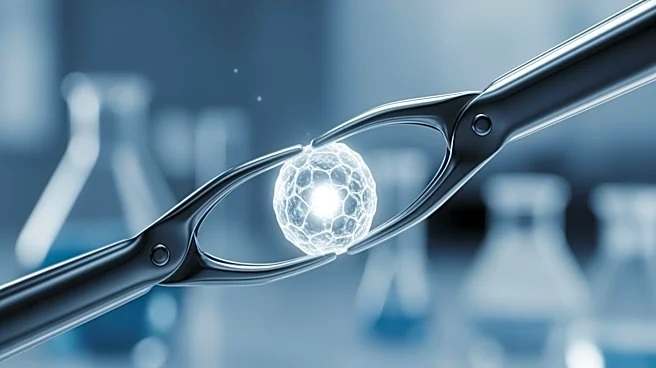
Researchers at Purdue University have developed a force-sensing mobile microgripper (MMG) designed to handle cell spheroids with care, addressing the challenges of tissue engineering. Spheroids, which model complex human tissues, are fragile and can be
damaged by traditional manual handling techniques. The MMG, a microscopic robot, uses magnetic fields for controlled gripping, minimizing the risk of damage. This innovation allows for the safe bioassembly of different spheroids into a single construct, as detailed in a paper published in APL Bioengineering. The MMG's gripping force is monitored and adjusted in real time, ensuring compatibility with the delicate nature of the cells. In vitro testing has shown the device's efficacy in moving and organizing spheroids into neat patterns, with plans to further develop the technology for creating full engineered tissues.
Why It's Important?
The development of the force-sensing MMG represents a significant advancement in tissue engineering, a field crucial for regenerative medicine and drug testing. By enabling the safe manipulation of spheroids, this technology could lead to more accurate models of human tissues, improving the reliability of preclinical research. This innovation addresses a critical need for gentle handling techniques in tissue engineering, potentially reducing the risk of damage to living cultures. The ability to integrate different spheroids into one culture without damage could enhance the development of complex tissue models, benefiting researchers and industries focused on regenerative medicine and therapeutic development.
What's Next?
Future developments for the MMG include transitioning from manual to automated spheroid assembly, which could further streamline tissue engineering processes. Researchers aim to use these microgrippers to create full engineered tissues, expanding their application in regenerative medicine. The continued refinement of this technology could lead to broader adoption in laboratories, enhancing the precision and efficiency of tissue engineering practices. As the technology evolves, it may attract interest from biotech companies and research institutions seeking to improve their tissue modeling capabilities.