


What's Happening?
The 2026 NCAA Men's Basketball Tournament has highlighted the significant impact of transfer players on college basketball teams. With the ability for athletes to transfer without sitting out a year, the landscape of college basketball has shifted, allowing
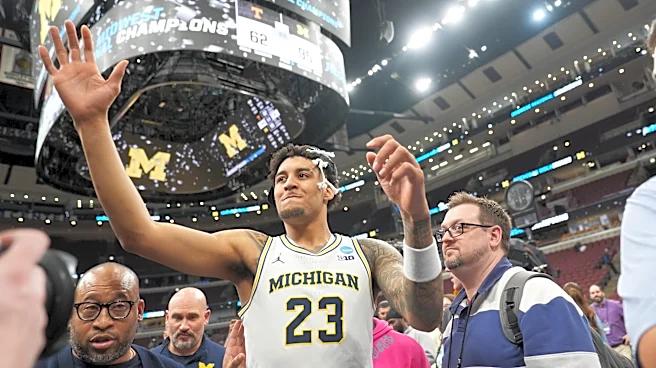
teams to quickly rebuild and strengthen their rosters. This year's Final Four features prominent transfer players such as Yaxel Lendeborg from Michigan, Jaden Bradley from Arizona, and Tarris Reed Jr. from UConn, who have become key contributors to their teams' successes. Lendeborg, a consensus All-American, has excelled at Michigan, while Bradley has become a pivotal player for Arizona, earning Big 12 Player of the Year honors. Reed has been instrumental in UConn's tournament run, showcasing his skills as a dominant big man.
Why It's Important?
The rise of transfer players in college basketball underscores a transformative shift in how teams are built and compete at the highest levels. This trend allows programs to quickly adapt and enhance their competitiveness by integrating experienced players who can make immediate impacts. The ability to transfer without penalty has democratized talent distribution, enabling teams to fill gaps and address weaknesses more effectively. This shift not only affects team dynamics but also influences recruiting strategies, as coaches now consider the transfer portal as a vital component of their roster-building efforts. The prominence of transfer players in the Final Four highlights their critical role in shaping the outcomes of major tournaments and the future of college basketball.
What's Next?
As the NCAA continues to adapt to the evolving landscape of college athletics, the role of transfer players is likely to grow even more significant. Programs will increasingly rely on the transfer portal to bolster their rosters, potentially leading to more competitive balance across conferences. The success of transfer players in high-stakes tournaments like the NCAA Final Four may also prompt further discussions about the rules governing transfers and eligibility. Additionally, the impact of name, image, and likeness (NIL) deals could further influence players' decisions to transfer, as financial incentives become a more prominent factor in their collegiate careers.