


What's Happening?
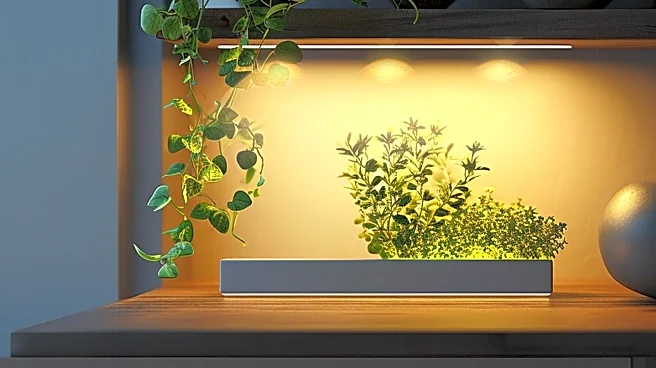
Indoor plants often struggle during the winter months due to reduced sunlight, lower humidity, and temperature fluctuations. To combat these challenges, smart lighting solutions, such as grow lights paired with smart plugs, are being utilized to optimize plant growth. These technologies allow for customizable scheduling and energy monitoring, providing a consistent light cycle that mimics natural sunlight. The use of LED grow lights, particularly those with a high photosynthetic photon flux density (PPFD), is recommended for their efficiency and effectiveness in promoting plant health. Additionally, smart plugs offer more flexibility than traditional timers, allowing users to set specific light cycles and monitor energy usage. This approach
is particularly beneficial for tropical plants that require more light and for indoor spaces with limited natural light exposure.
Why It's Important?
The adoption of smart lighting solutions for indoor plants is significant as it addresses the common issue of inadequate lighting during winter, which can lead to poor plant health. By providing a reliable and customizable light source, these technologies help maintain plant vitality, which is crucial for plant enthusiasts and those relying on indoor gardening for food production. The energy efficiency of LED lights also contributes to reduced electricity costs, making it a sustainable option for long-term use. Furthermore, the integration of smart technology in home gardening reflects a broader trend towards smart home solutions, enhancing convenience and control for users. This development is likely to drive further innovation in the smart home market, benefiting both consumers and tech companies.
What's Next?
As smart lighting solutions continue to gain popularity, further advancements in technology are expected. This could include more sophisticated smart plugs with enhanced features, such as remote monitoring and integration with other smart home systems. Additionally, as the indoor farming market grows, driven by advancements in automation and AI, there may be increased demand for more specialized grow lights tailored to specific plant needs. Companies in the smart home and lighting industries may also explore partnerships to develop comprehensive solutions that cater to the growing interest in indoor gardening. These developments could lead to more accessible and efficient options for consumers, further promoting the adoption of smart home technologies.
Beyond the Headlines
The use of smart lighting for indoor plants also raises considerations about the environmental impact of increased electricity usage, despite the energy efficiency of LED lights. As more households adopt these technologies, there may be a need for greater awareness and education on sustainable practices in indoor gardening. Additionally, the trend towards smart home solutions highlights the importance of data privacy and security, as these devices often connect to home networks. Ensuring that smart plugs and lighting systems are secure from cyber threats will be crucial as their usage becomes more widespread. These factors underscore the need for responsible innovation and consumer education in the evolving landscape of smart home technology.