
What's Happening?
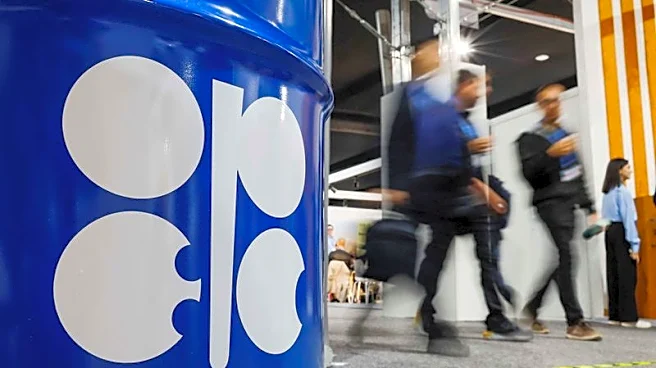
The United Arab Emirates (UAE) has officially exited the Organization of the Petroleum Exporting Countries (OPEC), a move that experts suggest could align more closely with U.S. interests. The UAE's decision,
which was unexpected in its timing, comes amid ongoing global oil supply disruptions due to the U.S.-Israel conflict with Iran. The UAE has expressed dissatisfaction with OPEC's production quotas, which have limited its ability to increase oil output despite significant investments in production capacity. The exit is seen as a strategic move to increase oil supply and potentially lower global oil prices once the Strait of Hormuz, a critical oil transit route currently blocked due to the conflict, reopens. This development could weaken OPEC's pricing power, a scenario welcomed by the U.S., which remains the world's largest oil producer.
Why It's Important?
The UAE's departure from OPEC could have significant implications for global oil markets and U.S. economic interests. By increasing oil supply, the UAE could help alleviate high oil prices that have contributed to inflationary pressures in the U.S. and globally. This move could also reduce the influence of OPEC and OPEC+ in setting oil prices, potentially leading to more competitive and stable markets. For U.S. oil and gas producers, the increased supply might exert downward pressure on profits, but it could also stabilize consumer prices, benefiting the broader economy. Additionally, the UAE's closer alignment with U.S. interests could strengthen geopolitical ties and economic cooperation between the two nations.
What's Next?
The UAE's decision may prompt other OPEC members to reconsider their positions, potentially leading to further defections and a reshaping of the organization's influence. The ongoing conflict in Iran and its impact on oil transit routes will continue to be a critical factor in global oil supply dynamics. As the situation evolves, stakeholders will be watching for changes in regional alliances, particularly within the Gulf Cooperation Council, and how these shifts might affect global energy markets. The U.S. will likely continue to monitor these developments closely, balancing its domestic energy interests with broader geopolitical considerations.
Beyond the Headlines
The UAE's exit from OPEC highlights the complex interplay between national interests and global energy governance. This move underscores the challenges faced by oil-producing nations in balancing domestic economic goals with international commitments. It also raises questions about the future of energy market regulation and the potential for increased competition versus cooperation among major oil producers. As countries navigate these dynamics, the role of alternative energy sources and the transition to cleaner energy solutions may gain prominence, influencing long-term strategies in the global energy sector.