



What's Happening?
The global waste management industry is witnessing a transformative shift with the integration of AI-powered robotic systems in sorting and recycling processes. As the world generates approximately 2.01 billion tonnes of municipal solid waste annually,
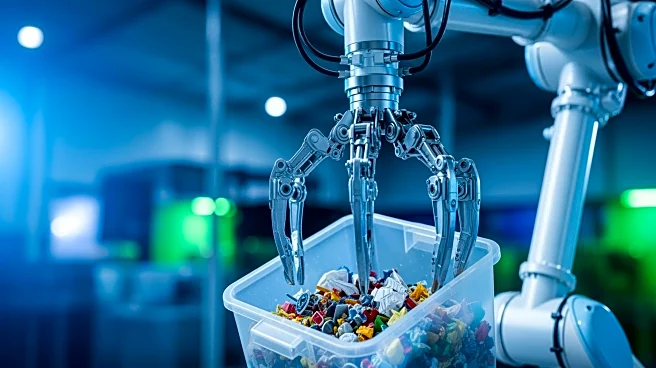
only a fraction is managed sustainably. Traditional recycling systems, which rely heavily on human labor and mechanical sorting, face challenges such as contamination and inefficiency. AI-driven robotics, however, are enhancing sorting accuracy and reducing contamination by using advanced technologies like computer vision and machine learning. These systems can identify materials by shape, texture, and even branding, leading to higher purity levels in recycled materials. Companies like AMP Robotics and ZenRobotics are at the forefront, deploying these technologies to improve recycling outcomes and redefine what materials can be economically recycled.
Why It's Important?
The adoption of AI-powered robotics in waste management is crucial for improving recycling efficiency and sustainability. By increasing the purity of recycled materials, these systems can enhance the economic value of recycling, making it a more viable industry. This shift not only reduces reliance on manual labor but also expands the range of materials that can be recycled, including complex waste streams like e-waste and flexible plastics. As the global recycling market is projected to grow significantly, driven by automation and environmental regulations, the integration of robotics could lead to substantial economic and environmental benefits. This technological advancement is pivotal in addressing the growing waste crisis and promoting a circular economy.
What's Next?
The continued development and deployment of AI-powered robotic systems in recycling facilities are expected to further enhance sorting accuracy and efficiency. As these technologies mature, they may lead to broader adoption across different regions, especially in high-cost labor markets. The data generated by these systems could also inform better waste management strategies and packaging designs, contributing to a more sustainable future. However, challenges such as high initial costs and the need for infrastructure upgrades remain. Overcoming these barriers will be essential for maximizing the potential of robotic sorting in transforming the waste management industry.
Beyond the Headlines
The integration of AI in waste management is not just a technological shift but a conceptual one, redefining waste as a resource to be managed intelligently. This transformation could lead to a more data-driven approach to recycling, where facilities operate as resource management systems rather than mere processing plants. The ethical implications of reducing environmental impact and conserving resources are significant, as is the potential for creating new economic opportunities in the recycling sector. As the industry evolves, it may also influence global policies and consumer behaviors towards more sustainable practices.