





What's Happening?
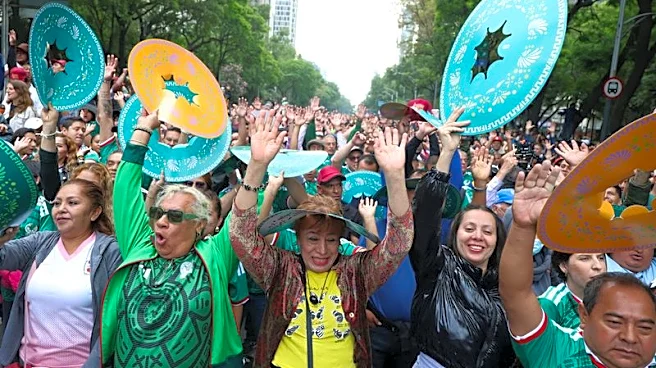
In Mexico, soccer is more than just a sport; it's a cultural phenomenon played in diverse and often unconventional locations. From urban neighborhoods in Monterrey to the crater of the extinct Teoca Volcano near Mexico City, communities have created soccer pitches
wherever space permits. These fields serve as social hubs, bringing together people of all ages to share in the love of the game. The sport is deeply ingrained in Mexican culture, with amateur tournaments held regularly, showcasing the community's passion and resilience.
Why It's Important?
Soccer's widespread popularity in Mexico highlights its role as a unifying force in society, transcending social and economic barriers. The sport provides a sense of community and identity, fostering social cohesion and offering a positive outlet for youth in challenging environments. The unique locations of these soccer fields, such as the UNESCO World Heritage Site in Xochimilco, also raise awareness about the need to balance cultural traditions with environmental conservation. As Mexico prepares to co-host the World Cup, the country's deep-rooted soccer culture will be in the global spotlight.
Beyond the Headlines
The creation of soccer fields in protected areas like Xochimilco has sparked tensions with local farmers, highlighting the challenges of balancing cultural practices with environmental preservation. The fields' impact on the habitat of endangered species, such as the axolotl salamander, underscores the need for sustainable development practices. Additionally, the sport's role in promoting inclusivity is evident in initiatives like the Sharks group, which organizes matches to support the LGBTQA+ community. These aspects reflect soccer's broader social and cultural significance in Mexico.