


What's Happening?
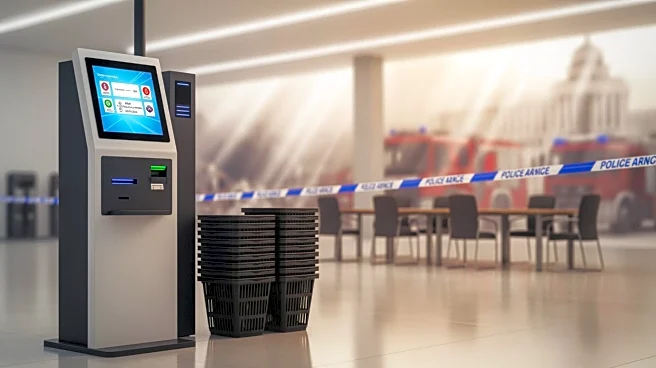
Supermarkets across the United States are reassessing their reliance on self-checkout systems due to operational challenges and increased shoplifting concerns. Initially introduced to reduce labor costs and enhance customer convenience, these systems have
not delivered the expected savings. According to a report by Raydiant, while 60% of consumers prefer self-checkout when given a choice, 67% have experienced failures with these kiosks. Issues such as unrecognized barcodes and system freezes have led to customer frustration. Retailers like Target are now limiting self-checkout to 10 items or fewer, and some, like Booths in the UK, are removing them entirely. The shift towards a hybrid model, offering both staffed and self-service options, reflects a broader trend of balancing automation with human interaction.
Why It's Important?
The reevaluation of self-checkout systems highlights the complexities of integrating technology into retail operations. While automation was expected to cut costs and improve efficiency, the reality has been different. The increase in shoplifting, referred to as 'shrinkage', and operational inefficiencies have led to financial losses for retailers. This situation underscores the importance of customer experience and trust in retail transactions. The move towards hybrid models suggests that while technology can enhance operations, it cannot fully replace the human element. This development could influence future retail strategies, emphasizing the need for a balanced approach to automation.
What's Next?
As supermarkets continue to adjust their checkout strategies, the focus will likely be on optimizing the balance between technology and human interaction. Retailers may invest in improving the reliability of self-checkout systems and training staff to manage both automated and traditional checkout processes effectively. The industry will also monitor consumer preferences closely to ensure that changes align with customer expectations. Additionally, addressing the issue of shrinkage will be crucial, potentially leading to the implementation of more sophisticated security measures.