


What's Happening?
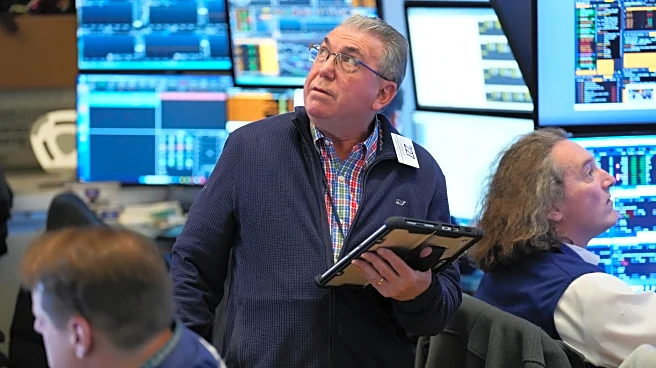
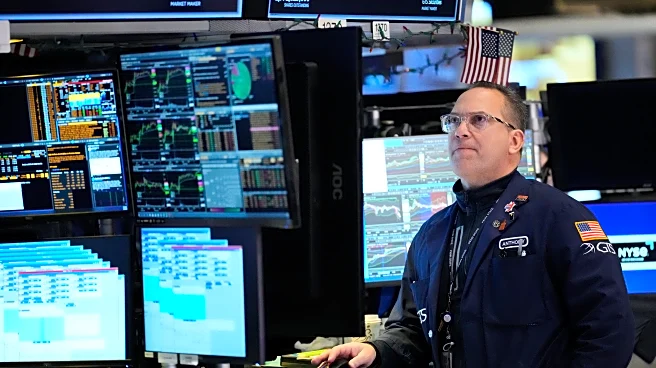
Renewed retaliatory strikes from Iran have heightened anxiety in U.S. financial markets, leading to a decline in futures and a surge in energy prices. The Dow Jones Industrial Average futures fell by 0.3%, while the S&P 500 and Nasdaq futures each decreased
by 0.1%. This market volatility is largely driven by the rising oil prices, with U.S. benchmark crude increasing by 3.5% to $77.25 per barrel, marking the highest level in over a year. The international standard, Brent crude, also saw a 2.8% rise to $82.87 per barrel. This increase in oil prices has resulted in a significant rise in gasoline prices, with the average price per gallon in the U.S. jumping from $2.98 to $3.25, a 9% increase. The ongoing conflict in the Middle East is causing concerns about prolonged inflation and its impact on corporate profits, complicating the Federal Reserve's efforts to manage inflation.
Why It's Important?
The escalation of conflict in the Middle East, particularly involving Iran, poses significant challenges for the U.S. economy. The surge in oil prices is likely to exacerbate inflationary pressures, making it more difficult for the Federal Reserve to consider lowering interest rates. This could result in sustained higher borrowing costs for businesses and consumers, potentially slowing economic growth. Additionally, the increased energy costs could impact corporate profitability, particularly for industries heavily reliant on fuel. The situation underscores the interconnectedness of global geopolitical events and domestic economic stability, highlighting the need for strategic economic planning in response to international conflicts.
What's Next?
As the conflict continues, market participants will closely monitor developments in the Middle East and their impact on oil prices. The Federal Reserve may need to reassess its monetary policy approach if inflationary pressures persist. Businesses and consumers should prepare for potential continued volatility in energy prices and its broader economic implications. The situation also calls for diplomatic efforts to de-escalate tensions and stabilize the region, which could help mitigate further economic disruptions.