






What's Happening?
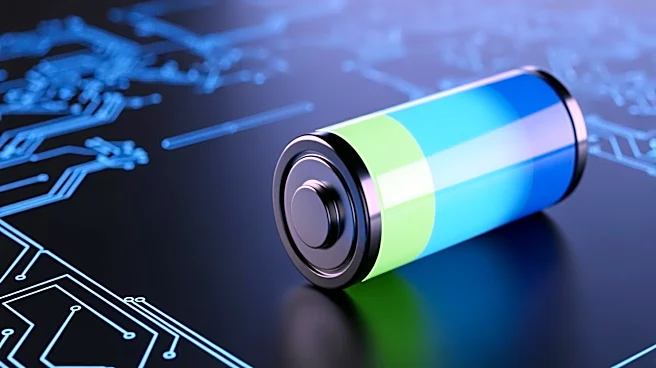
The demand for long-lasting energy storage is increasing, presenting a significant opportunity for U.S. and European clean technology companies to compete with China, which currently dominates the global battery sector. While lithium-ion batteries are
prevalent, they typically provide electricity for only about four hours, necessitating the search for alternatives that can discharge for days or weeks. China has a strong lead in lithium-ion batteries, but installations of long-duration systems are expected to surge as the world seeks to better utilize renewable energy. According to BloombergNEF, deployments are forecast to nearly quadruple this year following a record 2025. The U.S. is the second-largest market for long-duration storage and is expected to increase deployments later this decade.
Why It's Important?
The development of long-duration energy storage technologies is crucial for the U.S. as it seeks to enhance its renewable energy capabilities and reduce reliance on fossil fuels. This shift could help the U.S. compete with China's dominance in the battery sector, potentially leading to increased domestic manufacturing and job creation. Additionally, the diversification of energy storage technologies could provide more stable and reliable power solutions, supporting the growing demand for electricity and addressing challenges posed by variable renewable energy sources. The U.S. has a diverse range of technologies in development, which could give it an edge in creating tailored solutions for different regions and applications.
What's Next?
As the U.S. ramps up its efforts in long-duration energy storage, it is likely to see increased investment in research and development, as well as policy support to encourage the deployment of these technologies. The focus will be on developing cost-effective and scalable solutions that can be integrated into the existing energy infrastructure. Collaboration between government, industry, and academia will be essential to drive innovation and overcome technical challenges. The success of these efforts could position the U.S. as a leader in the global energy transition, reducing its carbon footprint and enhancing energy security.