
What's Happening?
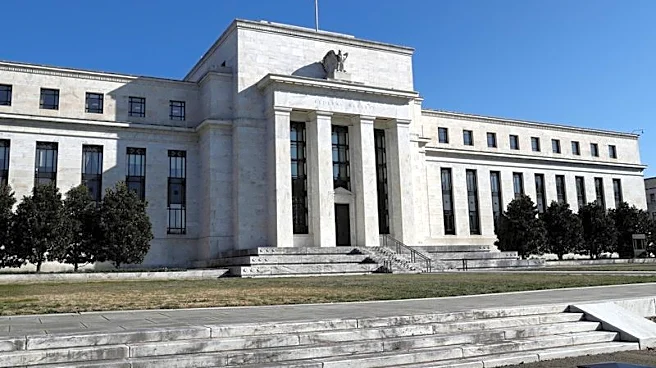
The Federal Reserve Bank of Boston has released a report indicating that the U.S. economy's exposure to global oil price shocks has fundamentally changed since the 1970s. The report suggests that due to increased
energy efficiency and domestic production, the impact of oil price surges on inflation is less severe than in the past. This change allows the Federal Reserve to focus more on inflationary impacts rather than employment effects when making monetary policy decisions. The ongoing U.S.-Israeli conflict with Iran has heightened inflation pressures, prompting discussions among Fed officials about the potential need for interest rate hikes if inflation does not ease. The Fed is expected to maintain its current interest rate range of 3.50% to 3.75% in its upcoming meeting, while monitoring the long-term effects of the conflict on inflation.
Why It's Important?
The findings from the Boston Fed highlight a shift in how the U.S. economy can handle oil shocks, which is crucial for monetary policy decisions. With inflation already above the Fed's 2% target, the ongoing conflict in the Middle East poses a risk of sustained high inflation. This situation could lead to interest rate hikes, affecting borrowing costs for businesses and consumers. The report's emphasis on inflation over employment effects suggests a potential shift in policy focus, which could influence economic growth and job market stability. Stakeholders in the energy sector may benefit from higher prices, while consumers could face increased costs.
What's Next?
The Federal Reserve is set to meet on June 16-17 to discuss monetary policy. While the current stance is to keep interest rates steady, the persistence of the Middle East conflict could lead to future rate hikes if inflation remains high. Fed officials will continue to assess the situation, balancing the need to control inflation with the potential impact on the job market. The outcome of the conflict and its effect on global oil supply will be critical in shaping future policy decisions.