





What's Happening?
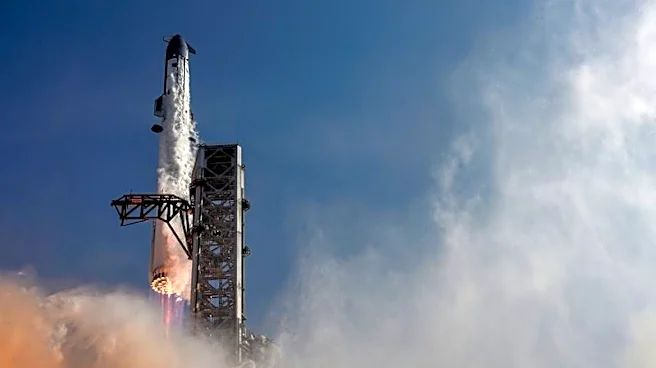
SpaceX's Starship launches have been temporarily grounded following a mishap during a recent test flight. The Federal Aviation Administration (FAA) announced that the incident involved the first-stage booster of the Starship rocket, which failed to perform
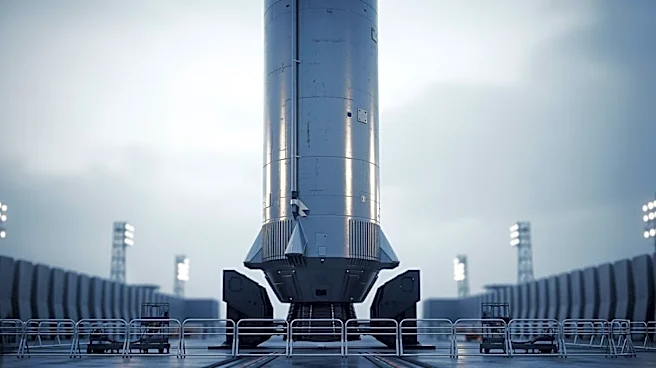
a controlled splashdown in the Gulf of Mexico after separating from the spacecraft. Instead, it made a hard landing. The spacecraft itself continued its mission, releasing 20 mock satellites before ending with a planned splashdown in the Indian Ocean. The FAA will oversee SpaceX's investigation into the incident. The Starship, which is SpaceX's largest and most powerful rocket, is designed for missions to Mars and is expected to play a key role in NASA's plans to land astronauts on the moon by 2028.
Why It's Important?
The grounding of SpaceX's Starship rockets is significant as it impacts the timeline for future space exploration missions, including NASA's lunar and Mars missions. The Starship is a critical component of SpaceX's vision for interplanetary travel and NASA's Artemis program. Any delays in its development and testing could affect the broader goals of space exploration and the commercial space industry. The investigation by the FAA underscores the importance of safety and reliability in space travel, which are paramount for gaining public and governmental trust in commercial space ventures.
What's Next?
SpaceX will conduct an internal investigation under the supervision of the FAA to determine the cause of the booster failure. The findings will be crucial in addressing any technical issues and ensuring the safety of future launches. The outcome of the investigation will also influence the timeline for resuming Starship flights and could impact SpaceX's contractual obligations with NASA. Stakeholders in the space industry will be watching closely for updates, as the resolution of this issue is vital for the continuation of planned space missions.