
What's Happening?
Impulse Space, a California-based company, launched a small spacecraft called Mira on a Falcon 9 rocket in January. This spacecraft, known as an orbital transfer vehicle, successfully deployed several
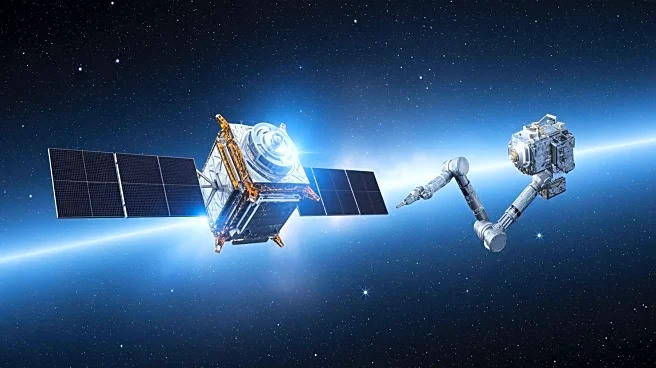
CubeSats and demonstrated high-thrust maneuvers. In a unique collaboration, Impulse Space handed control of Mira to Starfish Space, a Washington-based company, which installed its own software on the vehicle. Starfish Space aims to develop affordable spacecraft capable of servicing satellites in space, extending their operational lifetimes. Using a lightweight camera system and closed-loop guidance software, Starfish Space demonstrated autonomous rendezvous capabilities with another spacecraft, the first Mira vehicle launched by Impulse in November 2023.
Why It's Important?
This collaboration between Impulse Space and Starfish Space marks a significant advancement in affordable space technology. By demonstrating that a single camera system and software can autonomously rendezvous with another spacecraft, the companies are paving the way for cost-effective satellite servicing solutions. This could lead to extended lifetimes for satellites, reducing the need for frequent replacements and lowering costs for satellite operators. The development of such technology is crucial for the growing space industry, as it seeks more sustainable and economical methods to maintain and enhance satellite operations.
What's Next?
The successful demonstration of autonomous rendezvous technology by Starfish Space may encourage further collaborations and innovations in the space industry. As companies continue to seek cost-effective solutions for satellite servicing, this technology could become a standard practice, potentially leading to new business models and partnerships. The focus may shift towards refining and scaling these technologies to accommodate larger and more complex satellite systems, further enhancing the capabilities and sustainability of space operations.
Beyond the Headlines
The implications of this development extend beyond immediate technological advancements. It highlights the growing trend of collaboration between space startups, which could foster a more cooperative and innovative industry environment. Additionally, the success of affordable space technology may influence regulatory and policy frameworks, encouraging governments to support and invest in emerging space technologies. This could lead to increased competition and innovation, driving the space industry towards more sustainable and efficient practices.