



What's Happening?
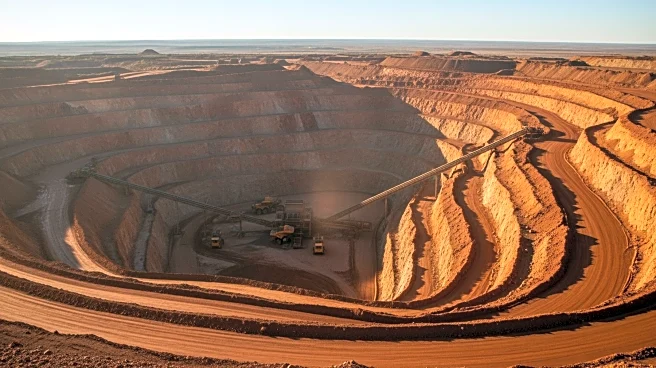
BHP has submitted a proposal for a significant expansion project at its Escondida mine in Chile, aiming to sustain production at the world's largest copper operation. The project, named 'Escondida New Concentrator,' involves an investment between $4.4
billion and $5.9 billion. It seeks to replace the aging Los Colorados processing plant with a new concentrator capable of producing between 220,000 and 260,000 tons of copper annually. The existing plant will be decommissioned once the new facility is operational. This development is part of BHP's strategy to maintain processing capacity at approximately 460,000 tons per day of ore. The construction is expected to take several years, with the first production anticipated between 2031 and 2032. The project is also projected to create significant employment opportunities, with an average workforce of about 2,500 people per month and a peak demand of up to 6,000 workers during construction.
Why It's Important?
The proposed expansion at Escondida is crucial for BHP to maintain its position as a leading copper producer. Copper is a vital component in various industries, including electronics and renewable energy, making its sustained production essential for global supply chains. The investment reflects BHP's commitment to long-term production stability and economic contribution to Chile. The project is expected to boost local employment and supplier activity, providing economic benefits to the region. Additionally, maintaining production levels at Escondida is vital for BHP's financial health and its ability to deliver shareholder value.
What's Next?
Pending environmental approval, BHP will proceed with the construction of the new concentrator. The company will likely engage with local communities and stakeholders to ensure compliance with environmental and social standards. The project's progress will be closely monitored by industry analysts and investors, given its potential impact on global copper supply and prices. BHP's ability to navigate regulatory and operational challenges will be critical to the project's success.