


What's Happening?
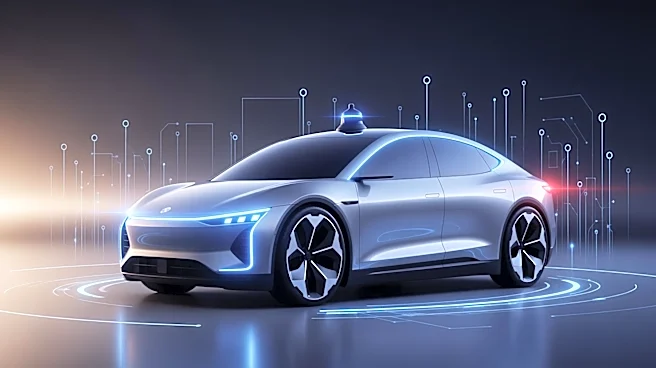
Rivian CEO RJ Scaringe has announced that self-driving vehicles are expected to be available before 2030, specifically targeting the years 2028 to 2030 for Level 4 autonomy. This level of autonomy implies that no human intervention is required for steering
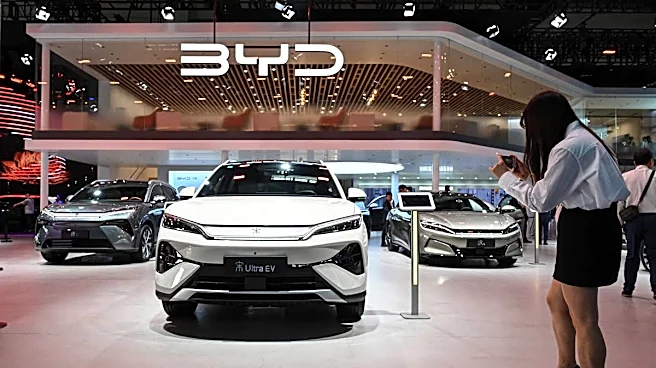
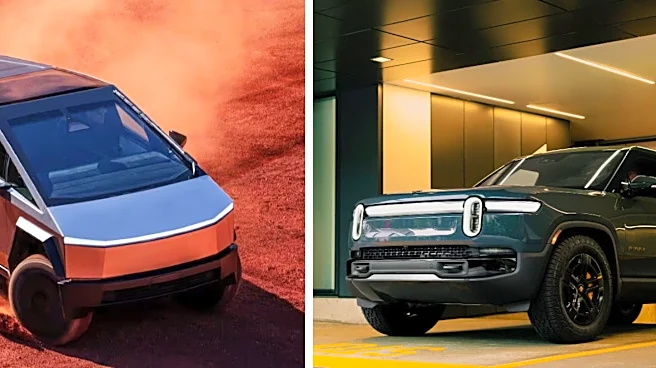
or braking controls. Scaringe's prediction contrasts with previous claims by Elon Musk, who anticipated self-driving technology as early as 2017. Rivian, along with other automakers like Volkswagen and BYD, is advancing rapidly in the development of autonomous vehicles, driven by the increasing integration of artificial intelligence. Scaringe is optimistic that Rivian will offer hands-off, eyes-off self-driving capabilities within 18 months, or by 2030 at the latest. The company employs radar and lidar technologies alongside cameras, unlike Tesla, which relies solely on cameras. This technological approach is part of Rivian's strategy to ensure robust and reliable autonomous driving solutions.
Why It's Important?
The advancement towards self-driving vehicles represents a significant shift in the automotive industry, with potential impacts on transportation, safety, and economic dynamics. Level 4 autonomy could revolutionize personal and commercial transportation by reducing human error and increasing efficiency. Automakers are racing to develop these technologies to avoid being left behind, as autonomous vehicles could redefine market leadership and consumer expectations. The integration of AI in driving systems is accelerating faster than anticipated, potentially leading to new business models and regulatory challenges. Companies like Rivian are positioning themselves to capture market share in this emerging sector, which could influence investment patterns and technological innovation across the industry.
What's Next?
As Rivian and other automakers continue to develop self-driving technologies, regulatory frameworks will need to adapt to accommodate these advancements. The next steps involve rigorous testing and validation of autonomous systems to ensure safety and reliability. Stakeholders, including government agencies, insurance companies, and consumers, will play crucial roles in shaping the future of autonomous driving. The industry may see increased collaboration between tech companies and automakers to enhance AI capabilities and address ethical and legal considerations. The timeline for widespread adoption of self-driving cars will depend on technological breakthroughs, public acceptance, and regulatory approval.
Beyond the Headlines
The push towards self-driving vehicles raises ethical and legal questions about liability and safety. As companies like BYD begin to take on liability for accidents involving their autonomous systems, the industry must address how responsibility is assigned in the event of a malfunction. The cultural shift towards accepting AI-driven transportation will require public education and trust-building measures. Long-term, the widespread adoption of autonomous vehicles could lead to changes in urban planning, with implications for traffic management and infrastructure development. The environmental impact of self-driving cars, particularly electric models, could contribute to sustainability goals by reducing emissions and optimizing energy use.