



What's Happening?
Recent research published in Nature indicates that reducing soot emissions from aircraft engines may not significantly decrease the formation of contrail clouds, which contribute to climate warming. The study involved in-flight observations of emissions from a passenger
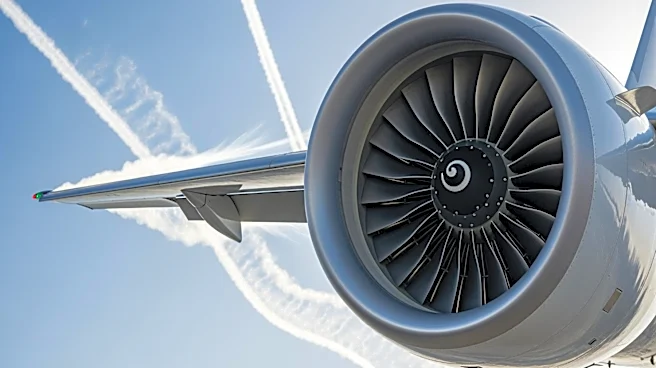
jet equipped with modern 'lean-burn' engines. Despite a 1,000-fold reduction in soot emissions, there was no notable decrease in contrail formation. The findings suggest that other factors, such as fuel sulfur content and emissions from lubrication oils, play a more significant role in contrail ice crystal formation. This challenges the aviation industry's current strategies aimed at reducing the climate impact of contrails by focusing solely on soot reduction.
Why It's Important?
The study's findings have significant implications for the aviation industry's efforts to mitigate its environmental impact. Contrails, which form when engine exhaust particles mix with water vapor and freeze, are known to trap heat and contribute to global warming. The research suggests that simply reducing soot emissions may not be sufficient to address this issue. This could prompt a reevaluation of current strategies and encourage further research into alternative methods of reducing contrail formation, such as altering fuel composition or engine combustion modes. The aviation industry, policymakers, and environmental groups may need to collaborate on developing more comprehensive approaches to reduce aviation's climate impact.
What's Next?
Further research is needed to explore how changes in fuel composition and engine combustion modes can effectively reduce contrail ice formation. The aviation industry may need to invest in developing new technologies or refining existing ones to address the broader range of emissions contributing to contrail formation. Policymakers could also play a role in setting new regulations or incentives to encourage the adoption of more environmentally friendly practices in aviation. As the industry seeks to balance growth with sustainability, these findings could influence future policy and technological developments aimed at reducing aviation's environmental footprint.