



What's Happening?
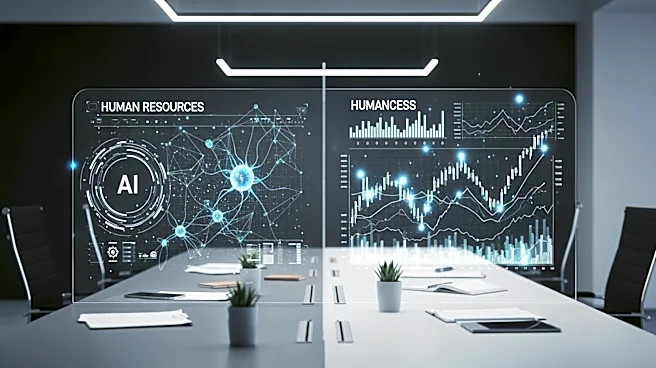
Deloitte has released reports highlighting differences in how HR and finance departments perceive AI integration within organizations. The CFO Guide to Tech Trends 2026 and the Global Human Capital Trends report both address AI-driven disruptions but
from different perspectives. While both agree on the importance of designing a hybrid human-AI workforce, they diverge on issues such as reskilling and governance. The CFO guide focuses on financial risks and infrastructure, while the HR report emphasizes cultural impacts and the need for human-centric AI design. The reports suggest that organizations taking a human-centric approach to AI are more likely to exceed ROI expectations.
Why It's Important?
The divergence between HR and finance on AI integration is crucial as it highlights the need for a cohesive strategy that balances technological advancement with human factors. Organizations that fail to address cultural impacts may face challenges in employee engagement and productivity. The reports underscore the importance of aligning HR and finance strategies to ensure successful AI adoption. This alignment is vital for organizations to navigate the complexities of AI integration, optimize workforce capabilities, and maintain competitive advantage. The findings may prompt leaders to reevaluate their approaches to AI, fostering collaboration between departments to achieve shared goals.
What's Next?
Organizations may need to develop integrated strategies that address both technological and human aspects of AI adoption. This could involve creating cross-functional teams to bridge gaps between HR and finance, ensuring that AI policies consider cultural impacts alongside financial metrics. As AI continues to evolve, companies may invest in training programs to enhance employee skills and adapt to new technologies. Additionally, leaders may focus on building trust and transparency within their organizations to mitigate cultural debt and foster a positive work environment. The reports suggest that organizations that proactively address these challenges will be better positioned to leverage AI for long-term success.