






What's Happening?
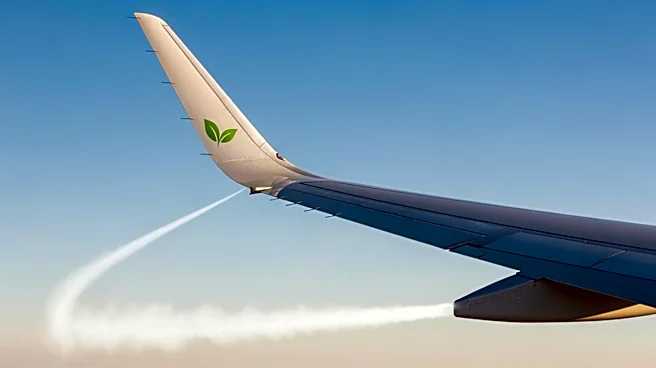
At the Aviation Festival Americas conference in Miami, several airline executives expressed skepticism about the short-term viability of sustainable aviation fuel (SAF) as a primary means to achieve net-zero carbon emissions by 2050. Breeze Airways CEO
David Neeleman criticized the high costs and limited supply of SAF, suggesting that a full transition to SAF could lead to significant job losses in the aviation industry. WestJet CEO Alexis von Hoensbroech echoed these concerns, noting that while SAF could eventually become viable, current production capacity and infrastructure are insufficient to meet aggressive mandates, particularly those set by the European Union. Other executives, like LATAM Airlines Group CEO Roberto Alvo, pointed to operational improvements and technology upgrades as more immediate solutions to reduce emissions. American Airlines VP of sustainability Jill Blickstein highlighted the challenges in creating a new aviation fuel market, citing the high cost of SAF compared to conventional jet fuel and the complexities of scaling production.
Why It's Important?
The skepticism surrounding SAF highlights significant challenges in the aviation industry's efforts to reduce carbon emissions. The high cost and limited availability of SAF pose economic and logistical hurdles, potentially impacting airline operations and employment. The industry's reliance on conventional jet fuel, which is difficult to replace due to its efficiency, underscores the need for alternative solutions. The discussion also reflects broader concerns about meeting international climate goals, particularly in regions with stringent environmental mandates. The focus on operational improvements and technology upgrades suggests a shift towards more immediate and feasible strategies for emission reduction, which could influence future policy and investment decisions in the aviation sector.
What's Next?
Airlines may continue to explore and invest in alternative strategies to reduce emissions, such as improving air traffic control systems and developing more efficient engines. The industry might also advocate for policy adjustments to support the gradual integration of SAF and other sustainable technologies. Stakeholders, including governments and environmental organizations, could play a crucial role in shaping the regulatory and economic landscape to facilitate these transitions. The ongoing dialogue among industry leaders may lead to collaborative efforts to address the challenges of scaling SAF production and infrastructure development.
Beyond the Headlines
The debate over SAF reflects broader ethical and environmental considerations, such as the balance between economic growth and sustainability. The industry's approach to reducing emissions could set precedents for other sectors facing similar challenges. Additionally, the focus on SAF and alternative solutions may drive innovation and technological advancements, potentially leading to new business opportunities and partnerships. The outcome of these efforts could influence public perception and consumer behavior regarding sustainable travel options.