


What's Happening?
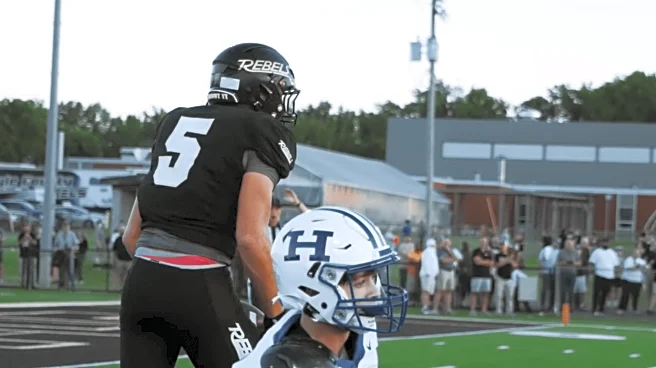
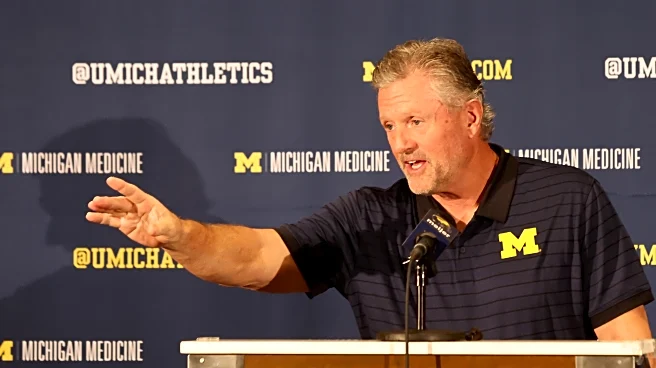
West Virginia University (WVU) is considering utilizing freshman Matt Sieg in a dual role for the 2026 football season. Sieg, a promising talent from Fort Cherry, PA, is primarily expected to focus on the defensive side as a safety. However, WVU head coach Rich Rodriguez has indicated that Sieg may also contribute offensively if needed. The official WVU roster lists Sieg as a safety, but his versatility could see him playing on both sides of the ball. This strategic decision aligns with WVU's broader plans to maximize Sieg's potential and impact on the team. The roster update also highlights a jersey number overlap with Oklahoma quarterback transfer Michael Hawkins Jr., which may require logistical adjustments during games.
Why It's Important?
The decision to potentially
use Matt Sieg in a dual role underscores WVU's strategic approach to leveraging player versatility to enhance team performance. Sieg's ability to contribute both defensively and offensively could provide WVU with a competitive edge in the Big 12 Conference. This move reflects a broader trend in college football where teams seek to maximize the utility of their players, especially those with unique skill sets. For WVU, Sieg's dual role could be pivotal in their quest for higher standings in the conference, potentially influencing recruitment strategies and game-day tactics. The decision also highlights the importance of adaptability in college sports, where player roles can significantly impact team dynamics and success.
What's Next?
As the 2026 season approaches, WVU will need to finalize Sieg's role and address the jersey number issue with Michael Hawkins Jr. This may involve strategic planning to ensure compliance with game regulations. Additionally, Sieg's development and integration into the team's defensive and offensive schemes will be crucial. WVU's coaching staff will likely focus on honing Sieg's skills and understanding of the playbook to optimize his contributions. The team's performance in the upcoming season will be closely watched, with Sieg's role potentially serving as a model for future player utilization strategies in college football.