



What's Happening?
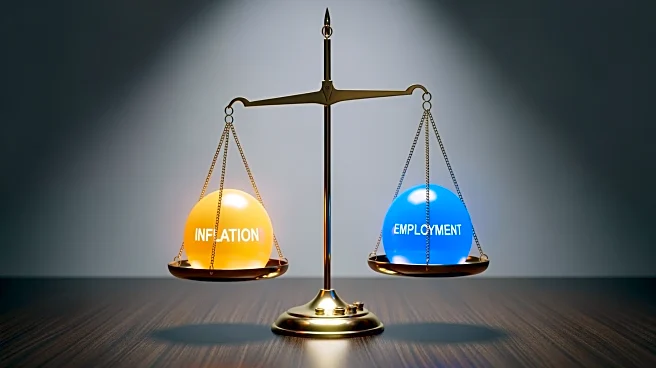
Richmond Federal Reserve President Tom Barkin has indicated that persistent inflation and recent strong job numbers could influence the Federal Reserve's risk assessment. The U.S. is currently engaged in military action in Iran, which has led to increased
crude oil prices, further complicating the economic landscape. The Federal Reserve's previous rate cuts were based on concerns about the labor market, but recent data suggests a shift in these risks. The Personal Consumption Expenditures price index is expected to remain above the Fed's 2% target, suggesting ongoing inflationary pressures. The Fed is set to meet on March 17-18 to evaluate these developments, with the potential for changes in interest rate policy.
Why It's Important?
The Federal Reserve's decisions on interest rates are crucial for the U.S. economy, affecting borrowing costs for businesses and consumers. Persistent inflation and strong job growth could lead the Fed to maintain or even increase interest rates, impacting economic growth and investment. The ongoing conflict with Iran adds uncertainty, particularly with rising energy prices that could affect consumer spending and business costs. The Fed's approach will be closely watched by investors and policymakers, as it will influence economic stability and growth prospects.
What's Next?
The upcoming release of February's job data will be a critical factor in the Fed's decision-making process. If job growth remains strong, it may reinforce the Fed's current stance on interest rates. However, any signs of weakness in the labor market or unexpected changes in inflation could prompt a reassessment. The Fed's meeting in mid-March will provide further insights into its policy direction, with potential implications for financial markets and economic stakeholders.