



What's Happening?
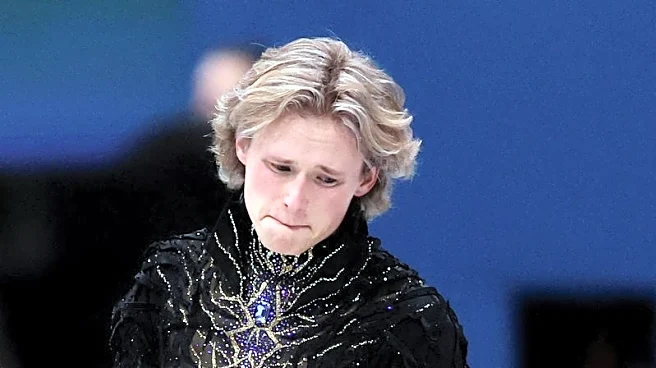
At the Milan Cortina Games, figure skater Ilia Malinin, known as the 'Quad God,' experienced a challenging performance, falling repeatedly on the Olympic stage. This phenomenon, often referred to as 'the yips' or 'twisties,' is a well-documented occurrence among elite athletes, including U.S. Olympians like Simone Biles and Nathan Chen. These performance blocks are attributed to the intense pressure and scrutiny athletes face during the Olympics, where years of preparation culminate in a brief window of competition. Sports psychologists emphasize the importance of mental preparation, including mindfulness and meditation, to manage these high-stress situations. Despite the setbacks, athletes like Malinin are encouraged to process their experiences
and use them as a foundation for future success.
Why It's Important?
The occurrence of 'the yips' at the Olympics highlights the psychological challenges faced by athletes at the highest level of competition. The intense media scrutiny and the narrow window for success can lead to performance failures, impacting athletes' careers and mental health. Understanding and addressing these issues is crucial for the development of support systems that help athletes cope with pressure and recover from setbacks. The ability to turn failure into a learning experience can lead to greater resilience and success in future competitions. This underscores the importance of mental health resources and support networks for athletes, which can have broader implications for sports psychology and athlete welfare.
What's Next?
For athletes like Ilia Malinin, the focus will be on processing the Olympic experience and rebuilding confidence for future competitions. Sports psychologists and coaches will continue to play a vital role in helping athletes develop strategies to manage stress and improve performance under pressure. As the conversation around mental health in sports grows, there may be increased emphasis on integrating psychological training into athletic programs. This could lead to more comprehensive support systems that address both the physical and mental aspects of athletic performance, potentially influencing how future Olympic teams are prepared.