
What's Happening?
The Association of American Railroads (AAR) has reported notable increases in U.S. rail carload and intermodal volumes for the week ending January 10. Rail carloads reached 232,803, marking a 16.7% annual
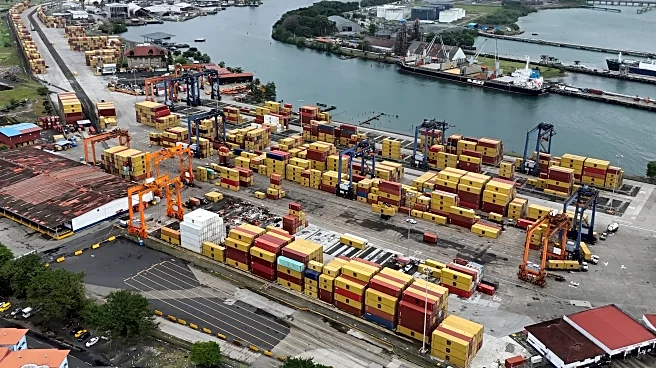
increase compared to previous weeks ending January 3 and December 27, which recorded 192,665 and 186,673 carloads respectively. Among the ten carload commodity groups tracked by AAR, nine experienced annual gains. Coal saw the largest increase, rising by 14,178 carloads to a total of 66,374. Other commodities such as nonmetallic minerals and grain also saw significant increases, with nonmetallic minerals up by 6,539 carloads to 28,766, and grain up by 4,956 carloads to 26,204. The only commodity group to experience a decline was forest products, which decreased by 748 carloads to 7,838. Intermodal containers and trailers also saw a 4.4% annual gain, reaching 277,654 units, surpassing the previous weeks' figures of 211,628 and 203,622 units.
Why It's Important?
The reported gains in rail carload and intermodal volumes are indicative of a strengthening U.S. freight transportation sector. This growth reflects increased demand for commodities such as coal, minerals, and grain, which are essential to various industries including energy, construction, and agriculture. The rise in intermodal volumes suggests improved efficiency and capacity in the transportation of goods, which is crucial for supply chain operations. These developments can have positive implications for economic growth, as increased freight activity often correlates with higher production and consumption levels. Stakeholders in the rail industry, including freight companies and logistics providers, stand to benefit from these trends as they may lead to increased revenue and expansion opportunities.
What's Next?
Continued monitoring of rail and intermodal volumes will be essential to assess the sustainability of these gains. Stakeholders may focus on optimizing operations to handle increased demand and explore investments in infrastructure and technology to further enhance capacity and efficiency. Additionally, potential policy changes or economic shifts could impact future trends in freight transportation. Industry leaders may engage in strategic planning to adapt to evolving market conditions and ensure resilience against potential disruptions.
Beyond the Headlines
The increase in rail and intermodal volumes may also have environmental implications. As rail transport is generally more energy-efficient compared to road transport, a shift towards greater rail usage could contribute to reduced carbon emissions. This aligns with broader efforts to promote sustainable transportation solutions. Furthermore, the growth in freight activity may stimulate job creation within the logistics and transportation sectors, providing economic benefits to communities reliant on these industries.