






What's Happening?
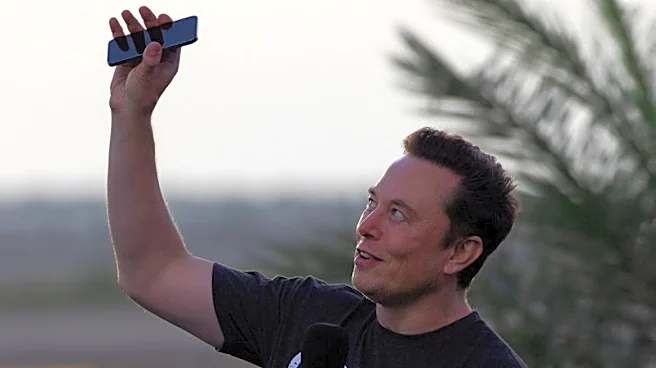
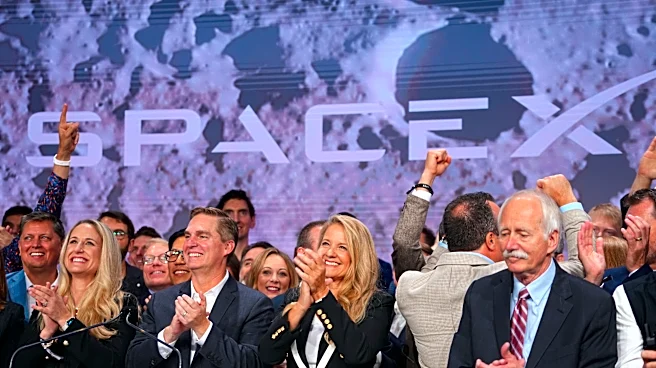
SpaceX, the aerospace company founded by Elon Musk, has made headlines with its initial public offering (IPO), which has become the largest in history. The company raised $75 billion by pricing 555.6 million shares at $135 each. This significant financial
event has drawn considerable attention, with SpaceX shares opening at $150 on the Nasdaq exchange, marking an 11% increase from the initial price. By midday, the share price had surged by 30%. This IPO is expected to significantly increase Elon Musk's wealth, potentially making him the world's first trillionaire. Despite SpaceX's impressive revenue of over $18 billion in 2025, the company reported a loss of $4.9 billion, contributing to total losses exceeding $37 billion since its inception. Nevertheless, investor confidence remains high, as evidenced by the record-breaking traffic on the Robinhood platform following the IPO.
Why It's Important?
The SpaceX IPO is a landmark event in the financial and aerospace sectors, highlighting the growing investor interest in space technology. The successful IPO underscores the market's confidence in SpaceX's potential, despite its financial losses. This event could pave the way for increased investment in space exploration and technology, potentially accelerating advancements in these fields. For Elon Musk, the IPO not only boosts his personal wealth but also solidifies his influence in the tech and space industries. The potential merger between SpaceX and Tesla, as hinted by SpaceX COO Gwynne Shotwell, could further integrate Musk's ventures, enhancing operational efficiencies and innovation capabilities.
What's Next?
Following the IPO, SpaceX is likely to focus on expanding its Starlink satellite network and developing its reusable launch vehicles. The company may also explore new partnerships and collaborations to enhance its technological capabilities. Investors and stakeholders will be closely monitoring SpaceX's financial performance and strategic decisions, particularly in light of the potential merger with Tesla. This merger, if pursued, could have significant implications for both companies, potentially reshaping the landscape of the automotive and aerospace industries.
Beyond the Headlines
The SpaceX IPO raises questions about the sustainability of high valuations in the tech and aerospace sectors, especially for companies with significant financial losses. It also highlights the growing influence of private companies in space exploration, traditionally dominated by government agencies. This shift could lead to new regulatory challenges and ethical considerations, particularly regarding the commercialization of space. Additionally, the potential merger with Tesla could spark debates about corporate governance and the concentration of power in the hands of a few key individuals.