
What's Happening?
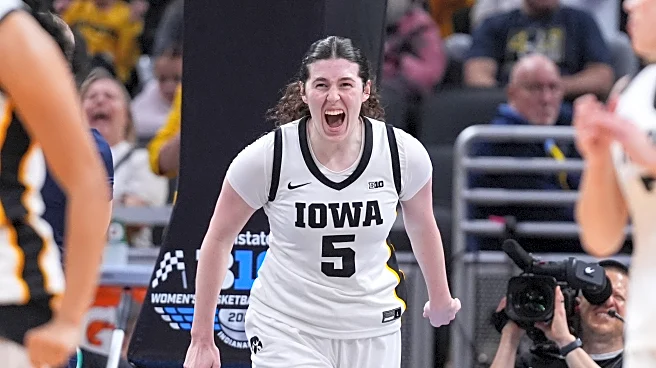
The 2023 NCAA championship game between LSU and Iowa, featuring standout performances by Angel Reese and Caitlin Clark, has been highlighted as a pivotal moment for women's basketball. LSU's Angel Reese famously mocked Iowa's Caitlin Clark with a 'you-can’t-see-me'
gesture, which became one of the most memorable moments of the game. The match, which LSU won 102-85, was watched by nearly 10 million viewers, marking a significant increase in viewership for women's basketball. This game is credited with advancing the sport's popularity more in 40 minutes than previous efforts over decades. The rivalry between Clark and Reese has continued to draw attention, with both players now making their mark in the WNBA.
Why It's Important?
The increased viewership and attention from the 2023 NCAA championship game signify a breakthrough for women's basketball, highlighting the sport's growing appeal. The rivalry between Caitlin Clark and Angel Reese has captivated audiences, drawing new fans to the sport and increasing its visibility. This surge in popularity could lead to greater investment in women's basketball, more media coverage, and increased opportunities for female athletes. The game also underscores the potential for women's sports to attract large audiences, challenging traditional perceptions and paving the way for future growth and recognition.
What's Next?
As the rivalry between Caitlin Clark and Angel Reese continues, it is likely to further boost interest in women's basketball. Their performances in the WNBA could attract more fans and media attention, potentially leading to increased sponsorship and broadcasting deals. The success of the NCAA championship game may encourage organizers to promote women's sports more aggressively, leveraging the momentum to expand the audience base. Additionally, the growing popularity of women's basketball could inspire young athletes, contributing to the sport's development at grassroots levels.
Beyond the Headlines
The cultural impact of the Clark-Reese rivalry extends beyond the court, challenging stereotypes and promoting gender equality in sports. The increased visibility of women's basketball can inspire broader societal changes, encouraging more women to participate in sports and pursue careers in athletics. This shift could also influence how women's sports are marketed and perceived, leading to more equitable treatment and opportunities. The success of the NCAA championship game serves as a reminder of the untapped potential in women's sports, highlighting the need for continued support and investment.