



What's Happening?
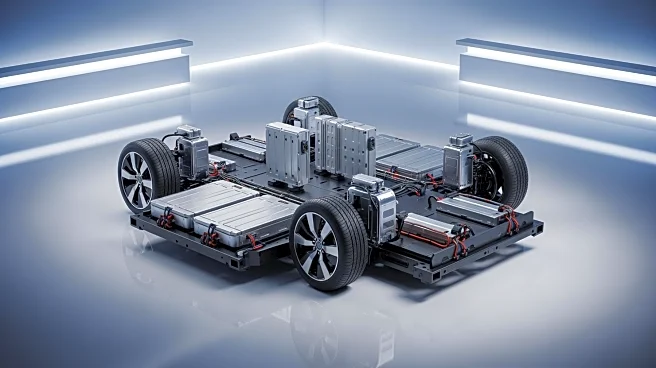
Ford Motor Company has reported $187 billion in revenues for 2025, marking its fifth consecutive year of top-line growth. The company's Ford Pro unit has been a significant growth driver, fueled by high demand for Super Duty trucks and expanding software and service offerings. Despite the positive financial performance, the broader U.S. stock market has experienced fluctuations in February due to concerns over artificial intelligence (AI) trade. Investors have been rotating out of tech stocks amid growing worries about the downsides of AI investments, leading to a selloff in the sector. Ford's hybrid strategy, which includes a focus on electric vehicles (EVs) and its Universal EV Platform, positions the company for long-term success despite
near-term losses in its Model e segment.
Why It's Important?
Ford's continued revenue growth highlights the company's resilience and strategic positioning in the automotive industry, particularly as it navigates the evolving landscape of electric vehicle adoption. The company's focus on expanding its software and service offerings, along with its hybrid strategy, underscores its commitment to innovation and diversification. This approach not only strengthens Ford's market position but also provides a buffer against market fluctuations, such as those caused by concerns over AI investments. The broader implications for the U.S. economy include potential shifts in investment strategies as companies and investors reassess the risks and rewards associated with AI and tech stocks.
What's Next?
Ford is likely to continue leveraging its strong liquidity profile and high dividend yield to attract investors seeking stability amidst market volatility. The company's strategic focus on its Universal EV Platform and Ford Energy initiatives may lead to further diversification and growth opportunities. As the automotive industry continues to evolve, Ford's ability to adapt and innovate will be crucial in maintaining its competitive edge. Additionally, the ongoing concerns over AI investments may prompt broader industry discussions and potential regulatory considerations regarding the impact of AI on financial markets.
Beyond the Headlines
The fluctuations in the stock market due to AI concerns may lead to increased scrutiny of AI technologies and their long-term viability. This could result in ethical and regulatory discussions about the role of AI in various industries, including automotive. Ford's strategic focus on EVs and diversification may serve as a model for other companies seeking to balance innovation with stability. The company's approach highlights the importance of adaptability and foresight in navigating complex market dynamics.